
Peptide Purity Testing
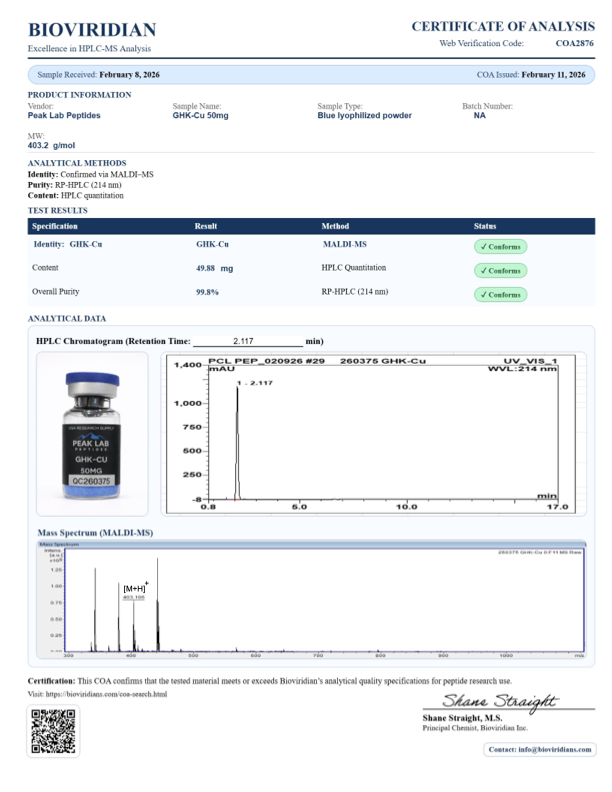
How We Test Every Batch
At Peak Lab Peptides, every research peptide is independently verified for purity and identity before it ships. Our peptide purity testing process uses two complementary analytical methods: High-Performance Liquid Chromatography (HPLC) and mass spectrometry (MS).
HPLC Purity Verification
HPLC is the established standard for peptide purity verification in research settings (see methodology). A sample from each batch is injected into an HPLC system, separated by its chemical components, and measured against total peak area. The result is a purity percentage. All Peak Lab batches must meet a minimum threshold of 99%+ purity. Most batches exceed 99.5%.
Mass Spectrometry Identity Confirmation
Mass spectrometry confirms the molecular weight and fragmentation pattern of each peptide, verifying that the correct amino acid sequence was synthesized. HPLC tells us how pure a batch is. Mass spectrometry tells us what it is.
Third-Party Independent Testing
All testing is conducted by independent USA-based laboratories — not in-house. This ensures objectivity and gives researchers confidence that results are not self-reported.
Certificate of Analysis
Every order includes a batch-specific Certificate of Analysis (COA) documenting HPLC purity percentage, mass spectrometry identity confirmation, lot number, and testing date. COAs can also be viewed on our Certificate of Analysis page.
Our Purity Guarantee
If independent third-party testing at a licensed facility shows results below labeled purity, we refund the product cost and reasonable testing fees. No questions asked.
Storage and Handling Standards
All lyophilized peptides are stored at -20°C prior to shipping. Cold-chain handling protocols are followed to preserve stability during transit.
All products are supplied for in vitro laboratory research use only. Not for human or veterinary use.