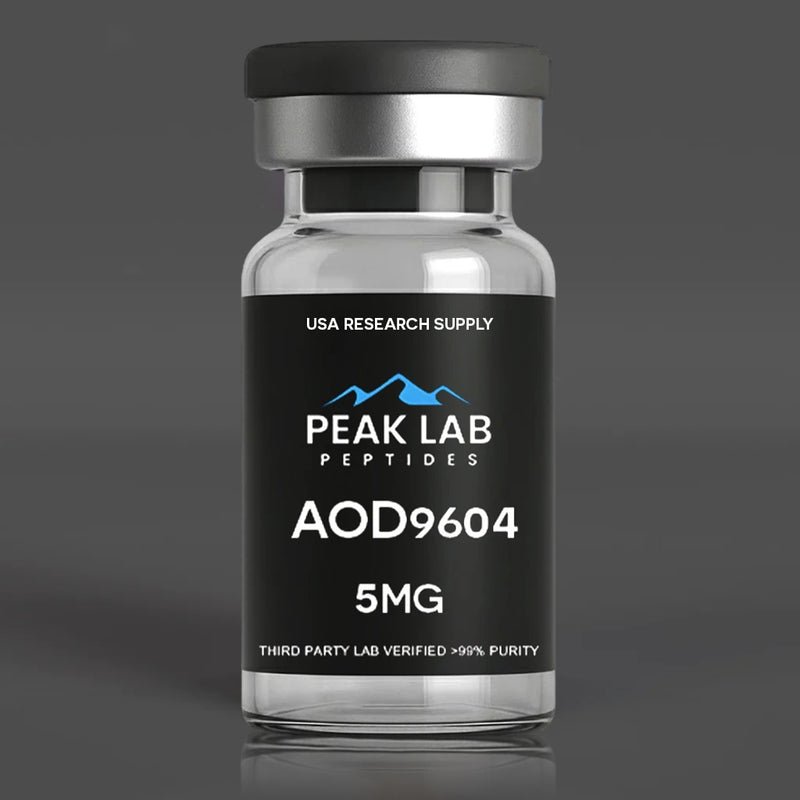
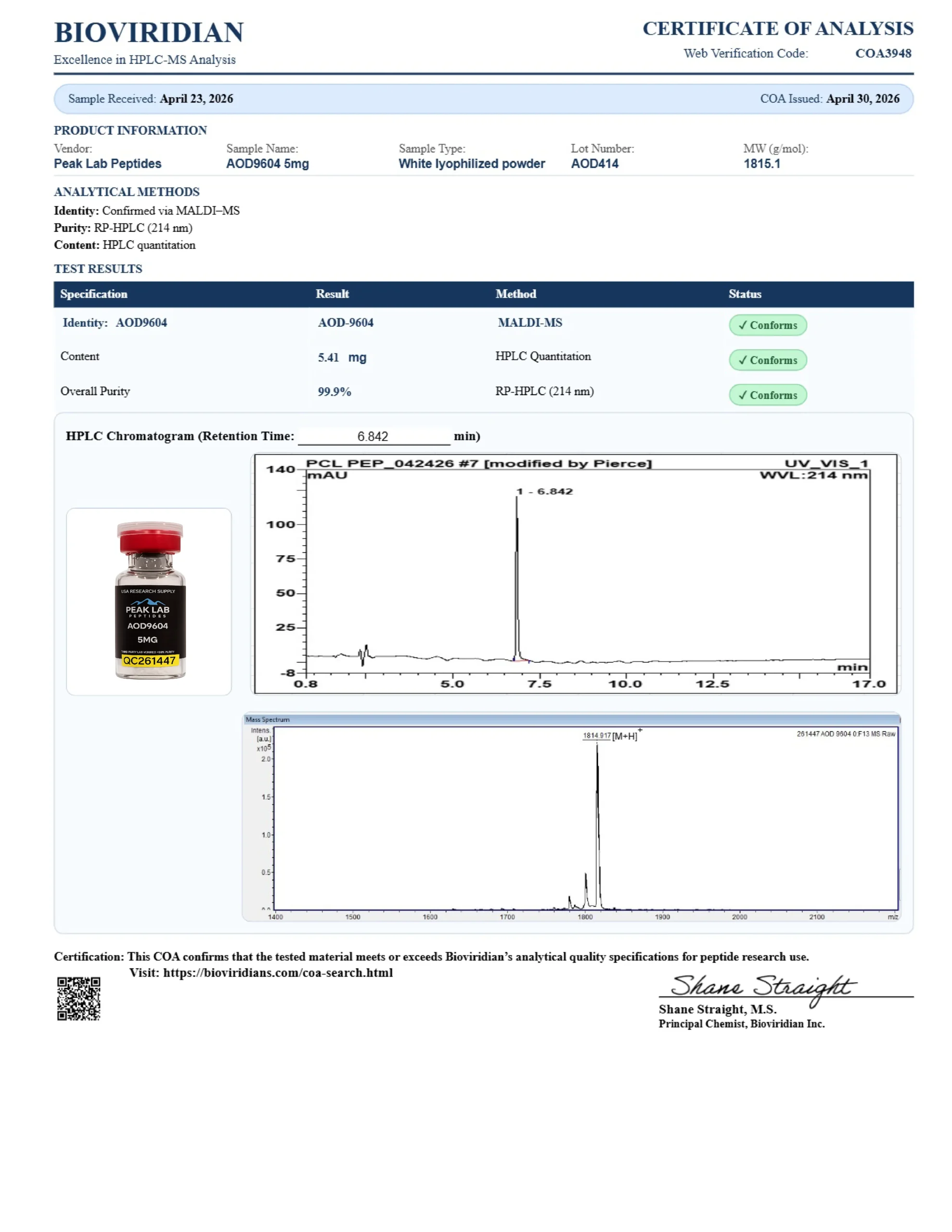
AOD9604
$60.00 Original price was: $60.00.$48.00Current price is: $48.00.
Recommended product: Acetic Acid
In stock
Become a Member and save 20% on Every Order.
Description
AOD9604
AOD-9604 – 5mg (Lyophilized Peptide) – For Research Use Only
AOD-9604 is a modified fragment of human growth hormone (HGH), specifically amino acids 176–191, developed for its potential role in fat metabolism and lipolysis research. Unlike full-sequence HGH, AOD-9604 is studied for its ability to promote fat breakdown without influencing blood sugar or IGF-1 levels, making it a focus of metabolic and weight management studies.
Research has explored its effects on adipose tissue, body composition, and metabolic rate regulation.
Product Details:
-
Peptide: AOD-9604 (HGH Fragment 176–191)
-
Purity: >98%
-
Form: Lyophilized powder
-
Quantity: 5mg per vial
-
Storage: Store at -4°F (-20°C). After reconstitution, refrigerate at 36–46°F (2–8°C) and use within 30 days.
-
Grade: For research purposes only. Not for human consumption, therapeutic, or diagnostic use.
Potential Research Applications:
-
Fat metabolism and lipolysis studies
-
Obesity and weight management research models
-
Adipose tissue regulation investigations
-
Metabolic health and energy balance research
AOD9604 is a synthetic peptide derived from the C-terminal fragment (176–191) of human growth hormone (hGH), modified to enhance stability and preserve specific metabolic properties while minimizing broader growth hormone–related effects. In research models, AOD9604 has been investigated primarily for its role in lipid metabolism, where it has been shown to influence lipolysis (fat breakdown) and lipogenesis (fat storage).
As a research-only compound, AOD9604 is used to explore mechanisms of adipose tissue regulation, cartilage and joint biology, and cardiometabolic pathways in preclinical settings. It is not approved for human or veterinary consumption and is supplied strictly for controlled laboratory use.
AOD9604 is a modified hGH fragment containing a di-sulfide bridge that enhances its structural stability. Unlike full-length hGH, AOD9604 is designed to selectively mimic the lipolytic region of the hormone without significantly impacting growth-promoting pathways. This makes it a useful tool for researchers studying:
- Regulation of adipose tissue metabolism
- Energy balance and obesity-related pathways
- Joint and cartilage biology in osteoarthritis models
- Metabolic factors associated with cardiovascular and systemic syndromes
In animal studies, AOD9604 has been reported to stimulate lipolysis and inhibit lipogenesis under specific experimental conditions, providing a platform to dissect signaling mechanisms involved in fat turnover and metabolic control.
1. AOD9604 and Obesity Models
AOD9604 was originally developed as an hGH analogue with targeted activity against excess adipose tissue. Preclinical and early-phase clinical investigations have examined its impact on body weight and fat mass:
- In obese animal models, AOD9604 has been associated with reductions in body weight and fat mass over defined treatment periods.
- Research indicates that AOD9604 can promote fat loss even in models lacking functional β3-adrenergic receptors, suggesting that additional mechanisms beyond classical adrenergic signaling are involved.
- These findings have led to hypotheses that AOD9604 may influence apoptosis pathways in white adipose tissue or engage other fat-specific signaling cascades.
In a human research context, AOD9604 has been evaluated in controlled settings to observe its impact on weight-related endpoints and the sustainability of these effects over several weeks. The data are interpreted as mechanistic insights rather than as evidence of established therapeutic efficacy.
2. AOD9604, Joint Function, and Cartilage Research
Beyond adipose-focused studies, AOD9604 has been examined in experimental models of joint disease and osteoarthritis:
- In rat models, intra-articular administration of AOD9604 has been explored for its effects on pain-related behavior, joint function, and structural parameters.
- Some studies have reported improvements in gross clinical assessment and microscopic cartilage features when AOD9604 is combined with existing interventions.
- These observations suggest that AOD9604 may interact with cartilage metabolism and joint remodeling pathways, making it a candidate tool for investigating chondrocyte activity, matrix turnover, and osteoarthritic progression in preclinical models.
The mechanisms underlying these potential synergistic effects remain under active investigation and may involve growth factor signaling, extracellular matrix synthesis, or anti-catabolic pathways in joint tissues.
3. AOD9604 and Cardiometabolic Research
Because excess adiposity is closely linked to cardiovascular risk, AOD9604 has also been studied in the broader context of cardiometabolic health:
- Fat reduction alone can influence cardiovascular biomarkers, but some studies suggest that AOD9604 may have effects on metabolic parameters that are not solely explained by weight loss.
- Researchers are exploring whether secondary pathways engaged by AOD9604—particularly those independent of β3-adrenergic receptor activation—may modulate lipid profiles, inflammatory markers, or other risk factors in animal models.
- Comparisons have been drawn to other agents that improve metabolic status without directly causing weight loss, supporting continued interest in AOD9604 as a mechanistic research tool.
These investigations aim to clarify how specific hGH-derived fragments can selectively impact metabolic networks and cardiovascular-related endpoints.
5 reviews for AOD9604
Q1: What is AOD9604?
A1: AOD9604 is a synthetic peptide derived from the human growth hormone fragment 176–191, modified to enhance stability and selectively support research on lipid metabolism and related pathways.
Q2: What are the primary research applications of AOD9604?
A2: Researchers use AOD9604 to study adipose tissue metabolism, obesity models, joint and cartilage biology, and cardiometabolic pathways in preclinical systems.
Q3: How does AOD9604 differ from full-length human growth hormone?
A3: Unlike full-length hGH, AOD9604 is designed to focus on lipolytic and anti-lipogenic activity while minimizing broader growth-related effects, making it more targeted for metabolic research applications.
Q4: Is AOD9604 intended for human or veterinary use?
A4: No. AOD9604 is supplied strictly for laboratory research use and is not intended for human or veterinary consumption, diagnosis, treatment, or prevention of any condition.
Q5: What has animal research suggested about AOD9604’s bioavailability?
A5: Studies in animal models have reported favorable oral and subcutaneous bioavailability for AOD9604; however, these findings do not translate directly to humans and are used only to guide preclinical experimental design.
Storage & Handling
All peptides are supplied as sterile, lyophilized powder and are stable when handled correctly.
- On arrival: Store vials in a cool, dry place away from heat and direct sunlight.
- Long-term (powder): For optimal longevity, keep lyophilized peptides refrigerated to help maintain integrity.
- After reconstitution: Use an appropriate research diluent (for example, BAC water). Store the reconstituted solution in the refrigerator and use within 20–30 days for best stability.
Note: Minimize exposure to moisture and repeated freeze–thaw cycles. Follow your institution's safety procedures when handling research materials.
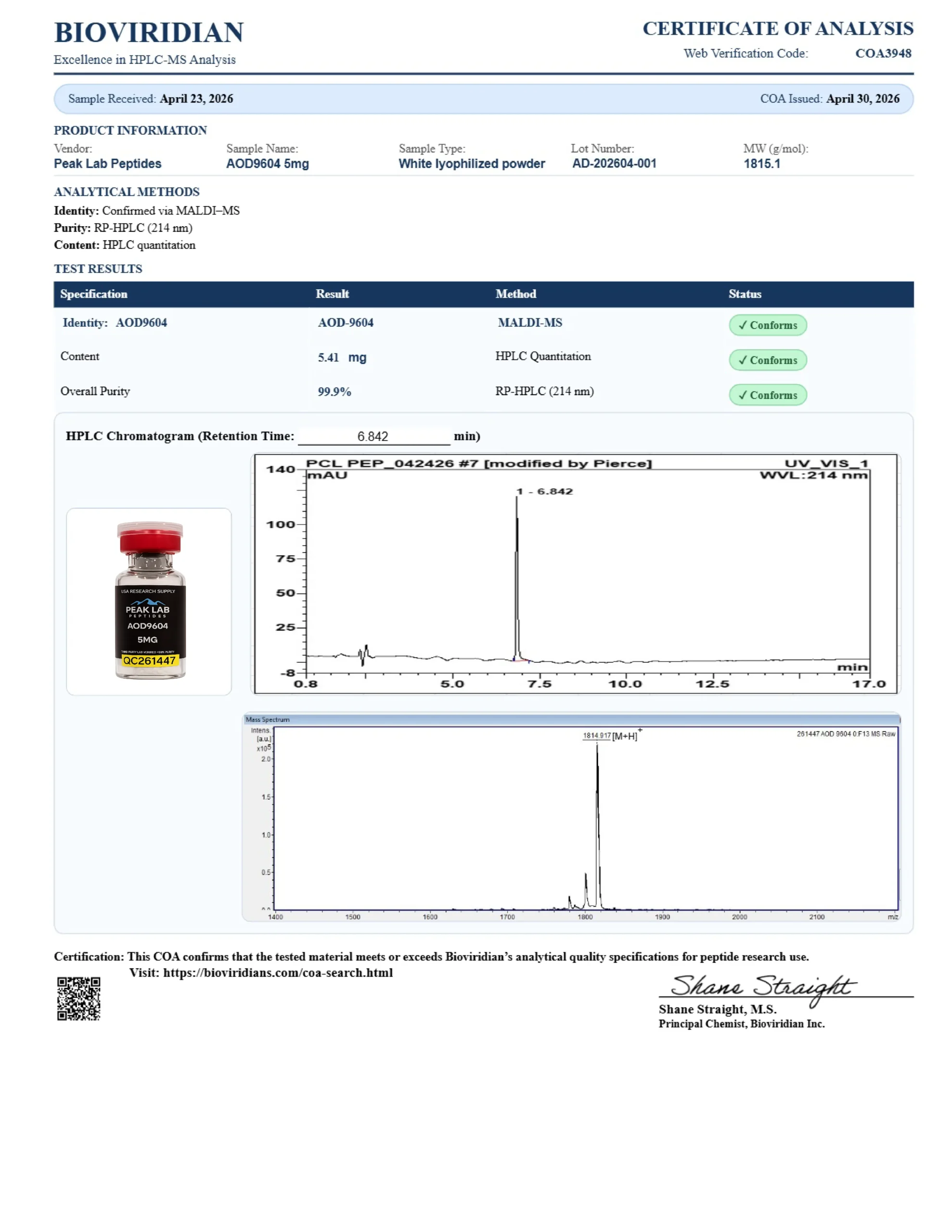
Peak Lab Peptides maintains quality-control processes and routinely performs third-party testing to support purity and identity verification. COAs are available upon request for applicable batches. Documentation may vary depending on production timelines.
We aim to make batch-level documentation available whenever possible. Our goal is to expand COA access across the full catalog as production capacity grows.
All products are for laboratory research use only and are not intended for human consumption.
Related Products
5-amino-1mq 5MG
5-Amino-1MQ (5-amino-1-methylquinolinium)
5-Amino-1MQ – Research Use Only
5-Amino-1MQ – 5mg (Lyophilized Powder) – For Research Use Only
5-Amino-1MQ is a small molecule methyltransferase inhibitor studied for its potential impact on cellular metabolism, energy regulation, and fat loss pathways. Research suggests it may inhibit NNMT (Nicotinamide N-Methyltransferase), an enzyme linked to metabolic rate and fat cell energy regulation.
Studies have explored 5-Amino-1MQ for its potential role in increasing NAD+ levels, enhancing energy expenditure, and promoting fat metabolism in various models.
Product Details:
-
Compound: 5-Amino-1MQ (5-Amino-1-Methylquinolinium)
-
Purity: >98%
-
Form: Lyophilized powder
-
Quantity: 50mg per vial
-
Storage: Store at -4°F (-20°C). After reconstitution, refrigerate at 36–46°F (2–8°C) and use within 30 days.
-
Grade: For research use only. Not for human consumption or therapeutic use.
Potential Research Applications:
-
Studies on NNMT inhibition and metabolic regulation
-
NAD+ production and energy pathway research
-
Fat metabolism and weight loss models
-
Investigations into cellular energy expenditure
Ara-290 (10mg)
ARA-290 (Cibinetide)
ARA-290 – 10mg (Lyophilized Peptide) – For Research Use Only
ARA-290 is a synthetic peptide derived from erythropoietin (EPO) that is specifically engineered to retain tissue-protective properties without stimulating erythropoiesis. It is widely studied for its potential in anti-inflammatory, neuroprotective, and tissue repair research.
ARA-290 interacts with the innate repair receptor (IRR), making it a promising candidate in research related to chronic inflammation, neuropathic pain, and autoimmune conditions.
Product Details:
-
Peptide: ARA-290
-
Purity: >98%
-
Form: Lyophilized powder
-
Quantity: 10mg per vial
-
Storage: Store at -4°F (-20°C). After reconstitution, refrigerate at 36–46°F (2–8°C) and use within 30 days.
-
Grade: Research use only. Not for human consumption or therapeutic use.
Potential Research Applications:
-
Anti-inflammatory pathway studies
-
Neuropathic pain models
-
Tissue protection and repair research
-
Innate repair receptor (IRR) exploration
DSIP
DSIP (Delta Sleep-Inducing Peptide)
DSIP (Delta Sleep-Inducing Peptide) – 5mg (Lyophilized Powder) – For Research Use Only
DSIP is a naturally occurring neuropeptide studied for its potential role in sleep regulation, stress response, and neuroendocrine function. Originally isolated from the brain, DSIP is of particular interest in research on sleep patterns, circadian rhythm modulation, and stress adaptation mechanisms.
Studies have also explored its potential influence on hormone release, oxidative stress, and neuroprotection.
Product Details:
-
Peptide: DSIP (Delta Sleep-Inducing Peptide)
-
Purity: >98%
-
Form: Lyophilized powder
-
Quantity: 5mg per vial
-
Storage: Store at -4°F (-20°C). After reconstitution, refrigerate at 36–46°F (2–8°C) and use within 30 days.
-
Grade: For research purposes only. Not for human consumption, therapeutic, or diagnostic use.
Potential Research Applications:
-
Sleep regulation and circadian rhythm studies
-
Stress adaptation and cortisol modulation research
-
Neuroprotection and oxidative stress models
-
Endocrine system and hormone balance investigations
For laboratory research only. This product is not intended to diagnose, treat, cure, or prevent any disease.
GLP-3 Reta
Retatrutide
GLP-3 R – 5mg-30mg (Lyophilized Peptide) – For Research Use Only
GLP-3 R is a novel research peptide categorized within the glucagon-like peptide (GLP) family, studied for its potential activity on metabolic regulation, appetite control, and glucose homeostasis. While structurally distinct from GLP-1 analogs, GLP-3 R is being investigated for its potential interactions with GLP receptor pathways and its role in energy balance, insulin sensitivity, and weight management.
This compound is part of emerging research aimed at expanding the understanding of gut hormone analogs and their effects on metabolic disorders.
Product Details:
-
Peptide: GLP-3 R
-
Purity: >98%
-
Form: Lyophilized powder
-
Quantity: 5mg-30mg per vial
-
Storage: Store at -4°F (-20°C). After reconstitution, refrigerate at 36–46°F (2–8°C) and use within 30 days.
-
Grade: For research purposes only. Not for human consumption, therapeutic, or diagnostic use.
Potential Research Applications:
-
Metabolic regulation and energy balance studies
-
Appetite suppression and satiety signaling research
-
Glucose metabolism and insulin response models
-
Exploration of novel GLP receptor analog activity
For laboratory research only. This product is not inte
Ipamorelin
Ipamorelin
Ipamorelin – 5mg (Lyophilized Peptide) – For Research Use Only
Ipamorelin is a selective Growth Hormone Secretagogue (GHS) studied for its ability to stimulate natural growth hormone (GH) release without significantly affecting cortisol or prolactin levels. Known for its clean safety profile in research models, Ipamorelin is commonly explored in studies on muscle growth, recovery, fat metabolism, and anti-aging.
Ipamorelin is often paired in research with other GH-releasing peptides like CJC-1295 No DAC for synergistic effects.
Product Details:
-
Peptide: Ipamorelin
-
Purity: >98%
-
Form: Lyophilized powder
-
Quantity: 5mg per vial
-
Storage: Store at -4°F (-20°C). After reconstitution, refrigerate at 36–46°F (2–8°C) and use within 30 days.
-
Grade: For research purposes only. Not for human consumption, therapeutic, or diagnostic use.
Potential Research Applications:
-
Growth hormone secretion and endocrine studies
-
Muscle growth, recovery, and anti-aging research models
-
Fat metabolism and body composition studies
-
GH axis and pituitary function investigations
For laboratory research only. This product is not intended to diagnose, treat, cure, or prevent any disease.
Sermorelin
Sermorelin
Sermorelin – 10mg (Lyophilized Peptide) – For Research Use Only
Sermorelin is a synthetic peptide analog of Growth Hormone-Releasing Hormone (GHRH 1-29), the active fragment responsible for stimulating natural growth hormone (GH) release. It is widely studied for its potential to enhance endogenous GH production, support recovery, promote muscle growth, and aid in anti-aging research models.
Sermorelin is often researched alongside other GH secretagogues such as Ipamorelin or CJC-1295 for synergistic effects on growth hormone pathways.
Product Details:
-
Peptide: Sermorelin (GHRH 1-29)
-
Purity: >98%
-
Form: Lyophilized powder
-
Quantity: 5mg per vial
-
Storage: Store at -4°F (-20°C). After reconstitution, refrigerate at 36–46°F (2–8°C) and use within 30 days.
-
Grade: For research purposes only. Not for human consumption, therapeutic, or diagnostic use.
Potential Research Applications:
-
Growth hormone stimulation studies
-
Muscle growth and recovery research models
-
Anti-aging and longevity studies
-
GH axis and endocrine function exploration
For laboratory research use only. This product is not intended to diagnose, treat, cure, or prevent any disease.
SLU-PP-332
SLU-PP-332
SLU-PP-332 is a synthetic research compound investigated for its interaction with metabolic and cellular regulatory pathways. Early laboratory studies suggest that SLU-PP-332 may influence energy homeostasis, mitochondrial activity, and cellular signaling mechanisms involved in metabolic balance. Because of these characteristics, SLU-PP-332 has become a subject of interest in preclinical research exploring metabolic function, energy utilization, and adaptive cellular responses under controlled conditions. As with all research compounds, SLU-PP-332 is supplied for laboratory and scientific use only. It is not approved for human use, medical purposes, or diagnostic applications. Researchers typically examine SLU-PP-332 in vitro or in controlled animal models to better understand its structure, stability, and functional characteristics within biological systems.TB-500
TB-500 (TB500)
TB-500 (Thymosin Beta-4 Fragment) – 5mg or 10mg (Lyophilized Peptide) – For Research Use Only
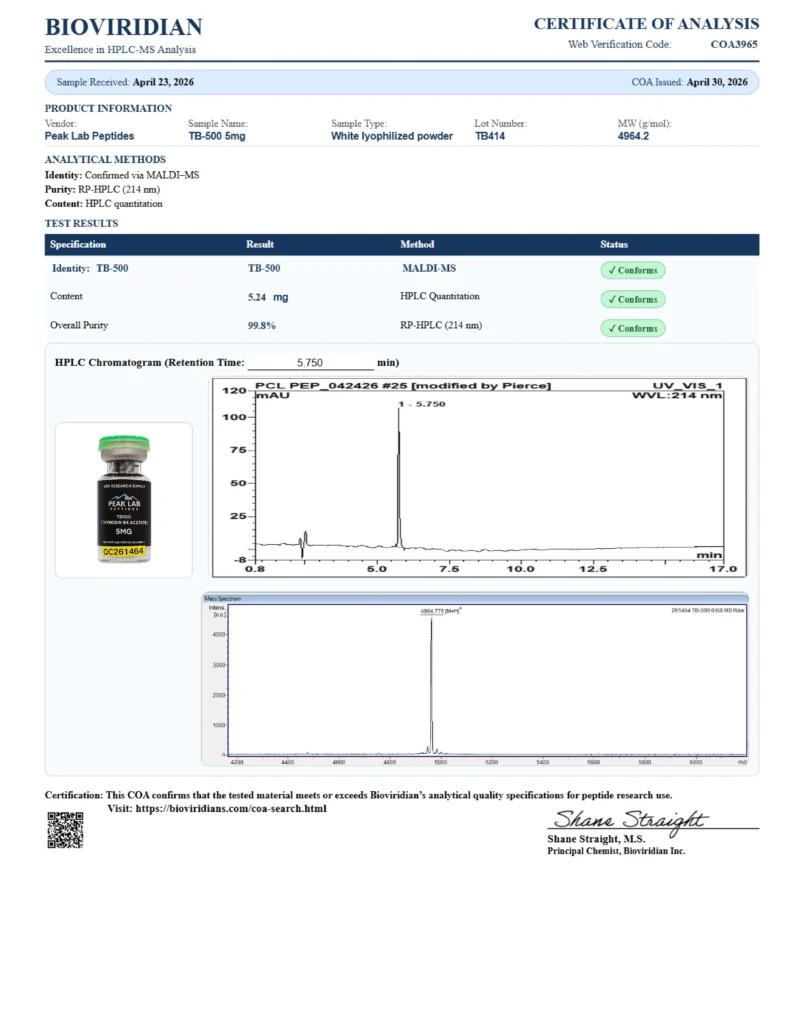
TB-500 is a synthetic Thymosin Beta-4 fragment studied in preclinical models for its roles in actin-binding dynamics, cell migration, angiogenesis, and tissue repair signaling. Supplied as lyophilized powder at 99%+ HPLC verified purity. Batch-specific COA included. For in vitro research use only.
Tesamorelin
Tesamorelin
Tesamorelin – 10mg (Lyophilized Peptide) – For Research Use Only
Tesamorelin is a synthetic peptide analog of Growth Hormone-Releasing Hormone (GHRH), specifically engineered to increase endogenous growth hormone (GH) secretion. It is widely studied for its potential effects on lipolysis, body composition, and metabolic health, particularly in models focused on visceral fat reduction and aging research.
Tesamorelin has been of special interest in studies involving growth hormone deficiency, fat metabolism, and cardiovascular risk markers.
Product Details:
-
Peptide: Tesamorelin (GHRH analog)
-
Purity: >98%
-
Form: Lyophilized powder
-
Quantity: 2mg per vial
-
Storage: Store at -4°F (-20°C). After reconstitution, refrigerate at 36–46°F (2–8°C) and use within 30 days.
-
Grade: For research purposes only. Not for human consumption, therapeutic, or diagnostic applications.
Potential Research Applications:
-
Growth hormone secretion and lipolysis studies
-
Visceral adipose tissue and metabolic research models
-
Body composition and anti-aging investigations
-
Cardiovascular risk factor and insulin sensitivity studies
For laboratory research only. This product is not intended to diagnose, treat, cure, or prevent any disease.

Donald –
Everything about this store feels professional and well managed.
Mark –
Products arrived safely and well protected with secure packaging.
Anthony –
The discounts are genuine and make bulk ordering affordable.
Matthew –
Every order has met the same high standard of quality.
Daniel –
The website is easy to navigate and checkout is hassle-free.