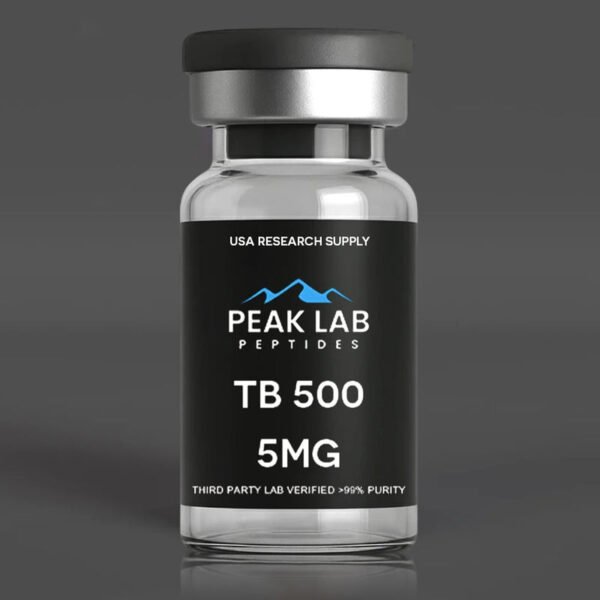
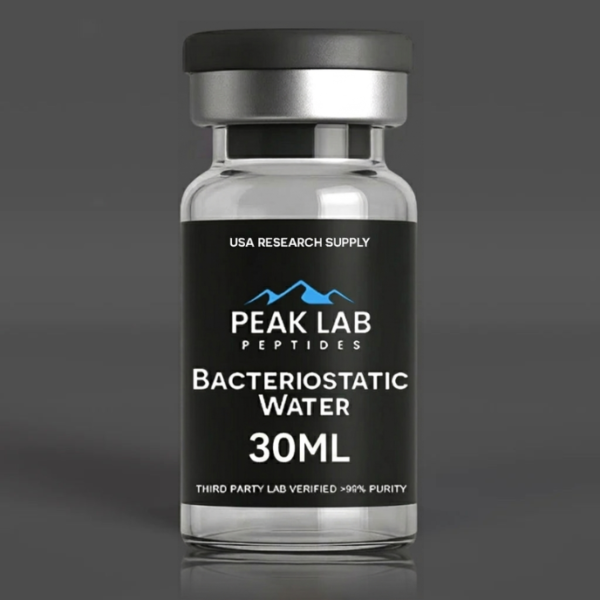
TB-500
$38.00 – $54.00Price range: $38.00 through $54.00

Become a Member and save 20% on Every Order.
Description
TB-500 (TB500)
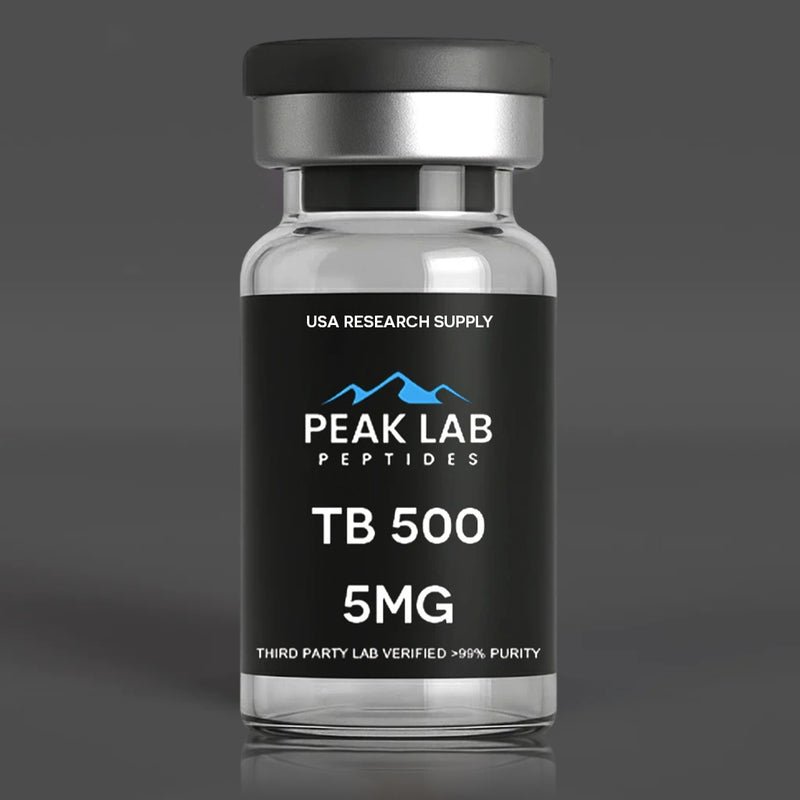
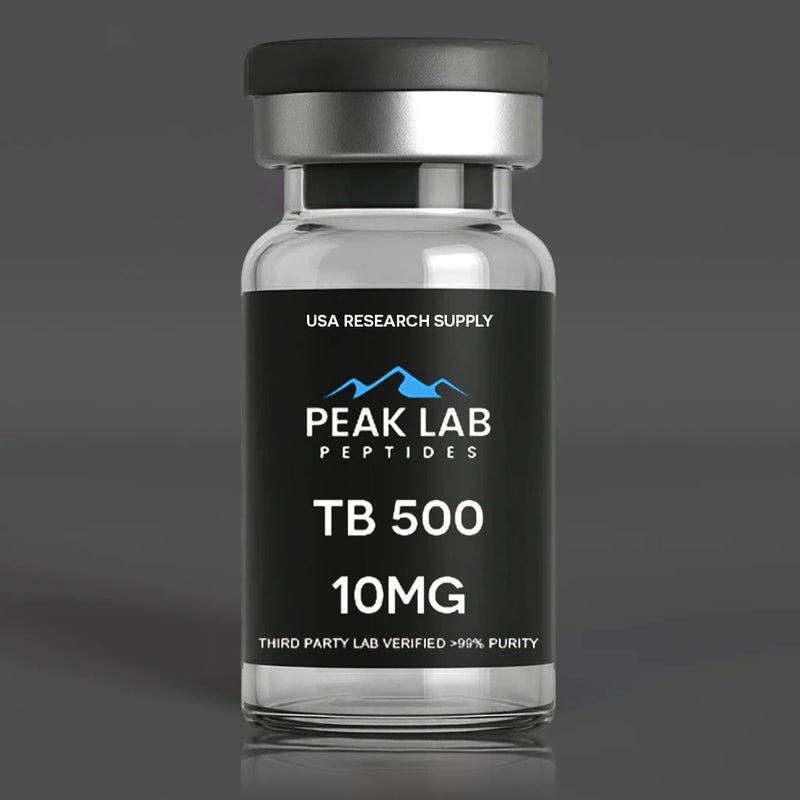
TB-500 (Thymosin Beta-4 Fragment) – 5mg or 10mg (Lyophilized Peptide) – For Research Use Only
TB-500 is a synthetic Thymosin Beta-4 fragment studied in preclinical models for its roles in actin-binding dynamics, cell migration, angiogenesis, and tissue repair signaling. Supplied as lyophilized powder at 99%+ HPLC verified purity. Batch-specific COA included. For in vitro research use only.
TB-500 peptide Details
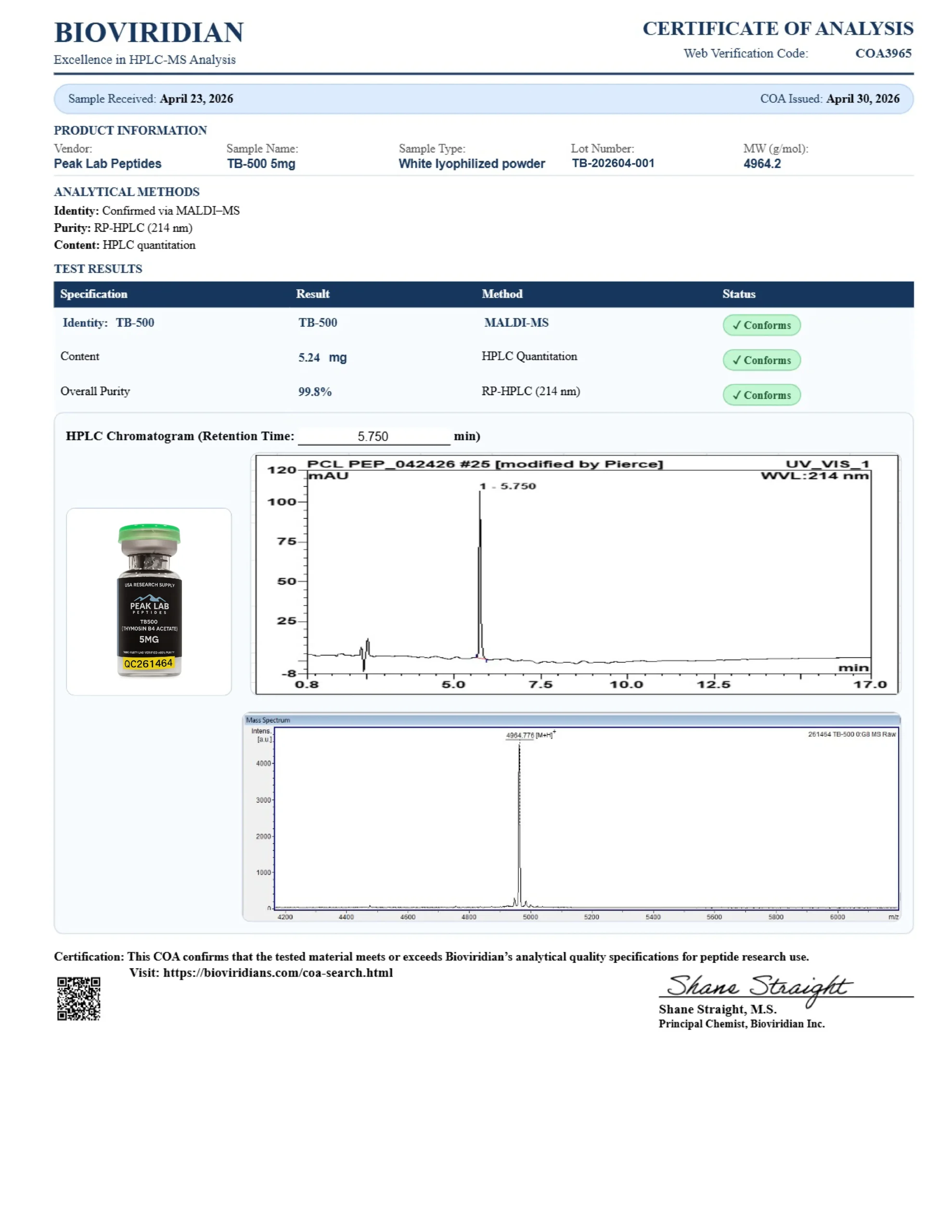
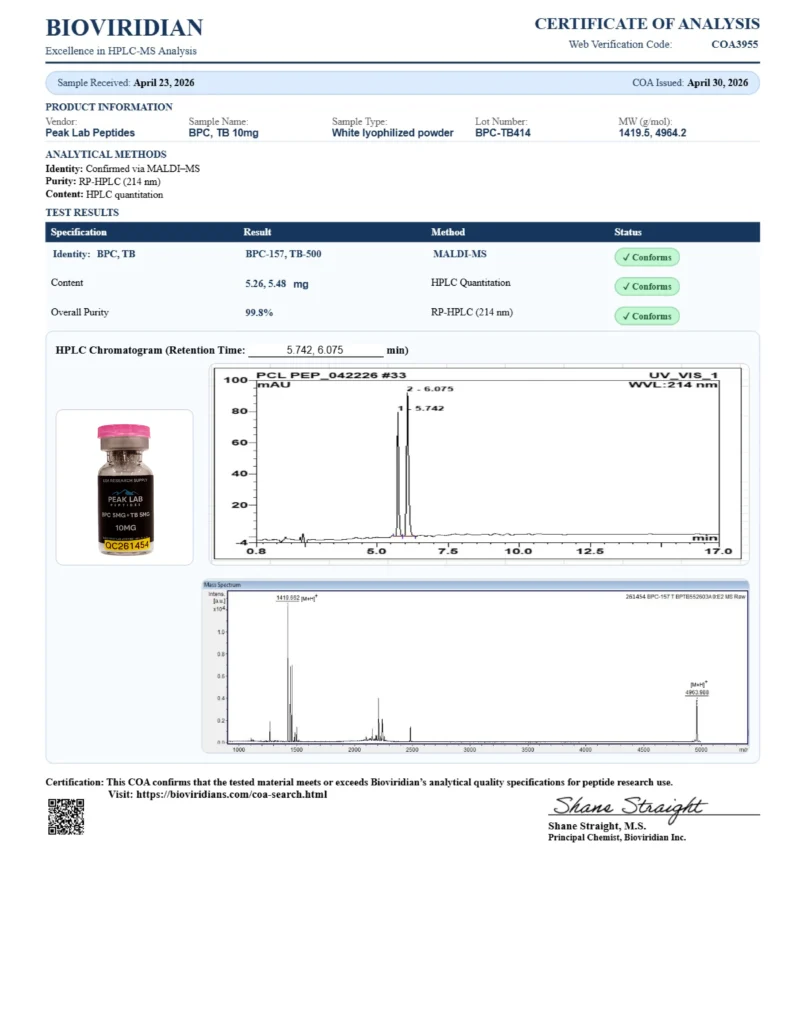
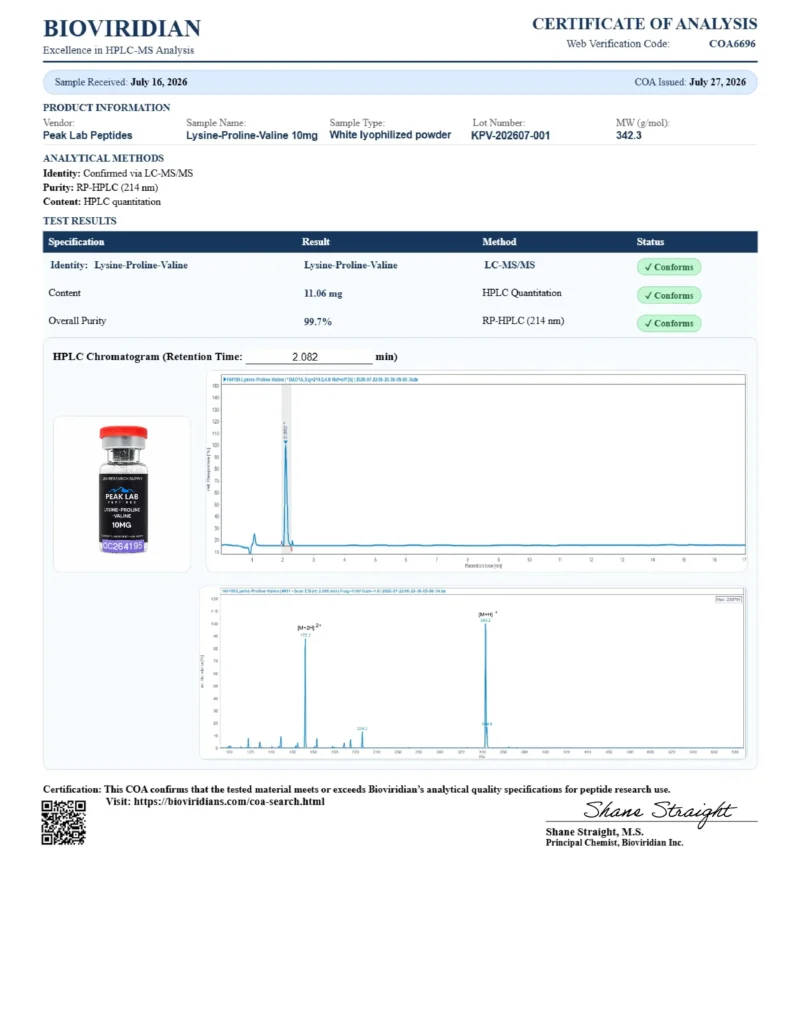
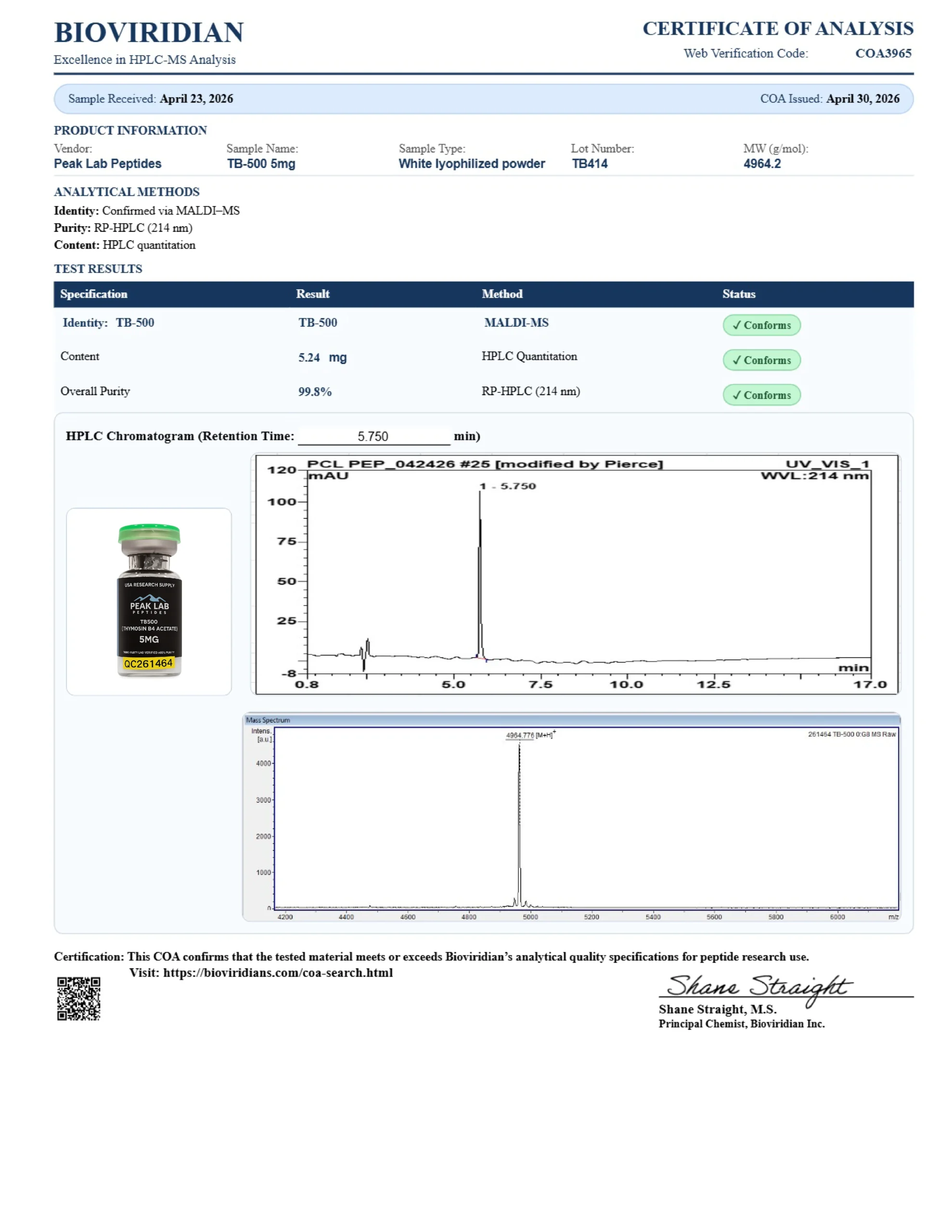
TB-500 Certificate of Analysis
Third-party tested. Click image to view full-resolution certificate.
TB-500 (Thymosin Beta-4) is a synthetic research peptide that mirrors a 43-amino-acid sequence of the naturally occurring actin-sequestering protein found in many tissues. It plays a significant role in cellular motility, tissue repair, and regeneration by modulating the polymerization and organization of actin filaments.
In preclinical models, TB-500 has been studied for its ability to influence cell migration, angiogenesis, and inflammatory responses. By regulating the G-actin/F-actin balance and promoting the expression of critical growth factors, TB-500 is a key tool in regenerative peptide research.
About TB-500 peptide
- Alias: Thymosin Beta-4 (Tβ4)
- Sequence: SDKP… (43 amino acids)
- Molecular Formula: C212H350N56O78S
- Molecular Weight: ~4963.5 Da
- Purity: ≥98% (HPLC verified)
- Form: Lyophilized peptide
- For Research Use Only: Not for human or veterinary use
TB-500 peptide Scientific Research
1. Cytoskeletal Remodeling
TB-500 regulates the actin cytoskeleton by sequestering G-actin and promoting polymerization into F-actin. This process is essential for changes in cell shape, migration, and structural plasticity.
2. Angiogenesis & Endothelial Cell Function
TB-500 has demonstrated pro-angiogenic properties in vitro and in vivo. It upregulates vascular endothelial growth factor (VEGF) and supports endothelial cell migration and tube formation, which are crucial for neovascularization in tissue repair models.
3. Wound Healing & Epithelial Regeneration
Studies have observed accelerated epithelialization in dermal and corneal injury models, suggesting that TB-500 promotes cell migration and tissue reorganization in healing wounds.
4. Anti-Inflammatory and Oxidative Stress Modulation
TB-500 influences inflammation resolution and cellular responses to oxidative stress, likely via modulation of key transcriptional regulators and cytokine pathways. It’s used in studies investigating systemic and localized tissue stress.
5. Extracellular Matrix & Tissue Remodeling
The peptide plays a role in ECM remodeling by influencing fibroblast activation, collagen deposition, and MMP (matrix metalloproteinase) expression, which are all key elements in soft tissue regeneration.
TB-500 peptide FAQ
Q: What is TB-500 derived from?
A: TB-500 is a synthetic peptide modeled after the natural protein Thymosin Beta-4, found in various mammalian tissues.
Q: What is the primary function of TB-500 in research?
A: It is used to study cellular migration, angiogenesis, and wound healing through actin cytoskeleton regulation.
Q: Is TB-500 injectable?
A: While some experimental studies use injection as a delivery method in animal models, TB-500 is strictly for research purposes and not for human administration.
Q: Can TB-500 promote muscle or tendon repair?
A: In preclinical studies, TB-500 has shown potential for improving soft tissue recovery in musculoskeletal models.
Q: Does TB-500 affect inflammation?
A: Yes. It has been studied for its anti-inflammatory and oxidative stress modulating properties, making it useful in systemic recovery models.
Storage & Handling
All peptides are supplied as sterile, lyophilized powder and are stable when handled correctly.- On arrival: Store vials in a cool, dry place away from heat and direct sunlight.
- Long-term (powder): For optimal longevity, keep lyophilized peptides refrigerated to help maintain integrity.
- After reconstitution: Use an appropriate research diluent (for example, BAC water). Store the reconstituted solution in the refrigerator and use within 20–30 days for best stability.
Note: Minimize exposure to moisture and repeated freeze–thaw cycles. Follow your institution's safety procedures when handling research materials.
Storage & Handling
All peptides are supplied as sterile, lyophilized powder and are stable when handled correctly.
- On arrival: Store vials in a cool, dry place away from heat and direct sunlight.
- Long-term (powder): For optimal longevity, keep lyophilized peptides refrigerated to help maintain integrity.
- After reconstitution: Use an appropriate research diluent (for example, BAC water). Store the reconstituted solution in the refrigerator and use within 20–30 days for best stability.
Note: Minimize exposure to moisture and repeated freeze–thaw cycles. Follow your institution's safety procedures when handling research materials.
Peak Lab Peptides maintains quality-control processes and routinely performs third-party testing to support purity and identity verification. COAs are available upon request for applicable batches. Documentation may vary depending on production timelines.
We aim to make batch-level documentation available whenever possible. Our goal is to expand COA access across the full catalog as production capacity grows.
All products are for laboratory research use only and are not intended for human consumption.
Related Products
Ara-290 (10mg)
ARA-290 (Cibinetide)
ARA-290 – 10mg (Lyophilized Peptide) – For Research Use Only
ARA-290 is a synthetic peptide derived from erythropoietin (EPO) that is specifically engineered to retain tissue-protective properties without stimulating erythropoiesis. It is widely studied for its potential in anti-inflammatory, neuroprotective, and tissue repair research.
ARA-290 interacts with the innate repair receptor (IRR), making it a promising candidate in research related to chronic inflammation, neuropathic pain, and autoimmune conditions.
Product Details:
-
Peptide: ARA-290
-
Purity: >98%
-
Form: Lyophilized powder
-
Quantity: 10mg per vial
-
Storage: Store at -4°F (-20°C). After reconstitution, refrigerate at 36–46°F (2–8°C) and use within 30 days.
-
Grade: Research use only. Not for human consumption or therapeutic use.
Potential Research Applications:
-
Anti-inflammatory pathway studies
-
Neuropathic pain models
-
Tissue protection and repair research
-
Innate repair receptor (IRR) exploration
BPC-157 10-Vial Kit
BPC-157 10 vial kit
BPC-157 10 vial kit (Body Protection Compound 157) is a synthetic pentadecapeptide studied in preclinical models for its roles in tissue repair signaling, angiogenesis, nitric oxide modulation, and gastrointestinal mucosal research. Supplied as lyophilized powder at 99%+ HPLC verified purity. Batch-specific COA included. For in vitro research use only.
CJC-1295 No DAC + Ipamorelin – 10-Vial Kit
CJC-1295 No DAC + Ipamorelin 10 vial kit
Product Details:
Peptides: CJC-1295 No DAC + Ipamorelin 10 vial kit Purity: >98% Form: Lyophilized powder Quantity: 10mg total per vial (typically 5mg of each peptide unless otherwise specified) Storage: Store lyophilized powder at -20°C. Once reconstituted, refrigerate (2–8°C) and use within 30 days. Research Grade: For laboratory research purposes only. Not for human use, therapeutic, or diagnostic applications. Research Applications May Include: Synergistic stimulation of natural GH release Studies on recovery, lean mass, and anti-aging Exploration of GH/GHRH/GHRP axis functionalityCJC-1295 No DAC + Ipamorelin – 5mg + 5mg (10mg total)
CJC-1295 No DAC + Ipamorelin
Product Details:
Peptides: CJC-1295 No DAC + Ipamorelin Purity: >98% Form: Lyophilized powder Quantity: 10mg total per vial (typically 5mg of each peptide unless otherwise specified) Storage: Store lyophilized powder at -20°C. Once reconstituted, refrigerate (2–8°C) and use within 30 days. Research Grade: For laboratory research purposes only. Not for human use, therapeutic, or diagnostic applications. Research Applications May Include: Synergistic stimulation of natural GH release Studies on recovery, lean mass, and anti-aging Exploration of GH/GHRH/GHRP axis functionalityGHK-Cu
Peptide Storage Case (3ml x 10) — Hard Shell Mid-Size Organizer
A versatile mid-size case for researchers who need more capacity without the bulk.
This hard shell peptide storage case is designed to securely hold up to 10 standard 3ml vials, with a precision-fit interior that keeps each vial stable and separated. Sized between our compact and full-size cases, this version is ideal for expanded setups that still need to stay portable and organized.
Key Features:
- Custom-fit layout: Holds 10 × 3ml vials
- Hard shell exterior: Durable, impact-resistant protection
- Secure closure: Keeps contents safely contained
- Precision interior insert: Reduces movement and vibration
- Mid-size & portable: Balanced capacity for daily use or travel
Designed for clean organization and reliable protection in any research environment.
Important:
- For research use only. Not for human consumption.
- Vials not included
Peptide Storage Case (3ml x 5 + Multi-Compartment) — Hard Shell Complete Organizer
An all-in-one solution for organizing your full research workflow.
This hard shell peptide storage case is designed to securely hold up to 5 standard 3ml vials, with additional dedicated compartments for other essential research materials. The precision-fit interior keeps every component stable and separated, so your full setup stays organized in a single case.
Built with a lightweight, impact-resistant shell and secure snap latches, this case is freezer and refrigerator safe — making it a reliable option for both at-home storage and on-the-go use.
Key Features:
- Custom-fit layout: Holds 5 × 3ml vials plus dedicated storage for essential research supplies
- Hard shell exterior: Durable, impact-resistant protection
- Secure snap latches: Keeps contents safely contained
- Precision interior compartments: Minimize movement and vibration
- Freezer & refrigerator safe: Maintains integrity in cold storage
- Compact dimensions: 6.75"W × 4"D × 2.25"H
- Travel-friendly: Lightweight and easy to transport
The most complete option in our storage lineup, built for researchers who want everything organized in one place.
Important:
- For research use only. Not for human consumption.
- Vials and supplies not included
Peptide Storage Case (3ml x 6) — Hard Shell Compact Organizer
A compact solution for organizing and protecting your research materials.
This hard shell peptide storage case is designed to securely hold up to 6 standard 3ml vials, with a precision-fit interior that keeps each vial stable and separated.
Smaller and more portable than our full-size case, this version is ideal for streamlined setups, travel, or keeping frequently used materials organized.
Key Features:
- Custom-fit layout: Holds 6 × 3ml vials
- Hard shell exterior: Durable, impact-resistant protection
- Secure closure: Keeps contents safely contained
- Precision interior insert: Reduces movement and vibration
- Compact & portable: Perfect for minimal setups or travel
Designed for clean organization and reliable protection in any research environment.
Important:
- For research use only. Not for human consumption.
- Vials not included
Thymosin Alpha-1
Thymosin Alpha-1 (Tα1)
Thymosin Alpha-1 – Research Use Only
Thymosin Alpha-1 – 5mg (Lyophilized Peptide) – For Research Use Only
Thymosin Alpha-1 (Ta1) is a naturally occurring peptide fragment derived from prothymosin alpha, studied for its potential role in immune modulation, inflammation control, and cellular defense mechanisms. It has been of particular interest in research models exploring immune response enhancement, antiviral activity, and immune regulation.
Thymosin Alpha-1 is often studied in relation to immune system support, chronic infection models, and immune deficiency research.
Product Details:
-
Peptide: Thymosin Alpha-1
-
Purity: >98%
-
Form: Lyophilized powder
-
Quantity: 5mg per vial
-
Storage: Store at -4°F (-20°C). After reconstitution, refrigerate at 36–46°F (2–8°C) and use within 30 days.
-
Grade: For research purposes only. Not for human consumption or therapeutic use.
Potential Research Applications:
-
Immune modulation and enhancement studies
-
Chronic infection and antiviral research models
-
Inflammatory response and cytokine regulation studies
-
Immune deficiency and autoimmune condition research