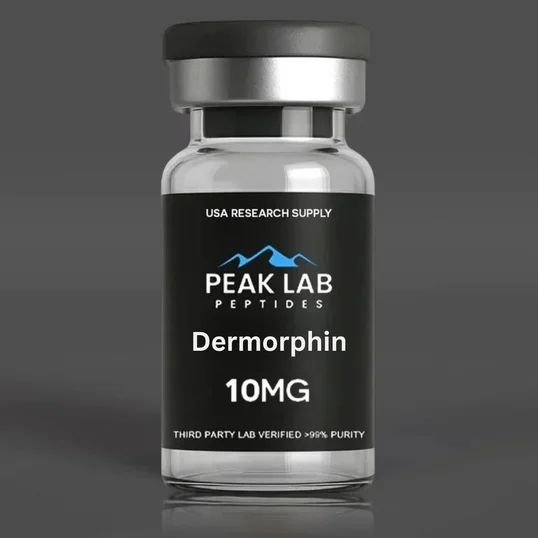
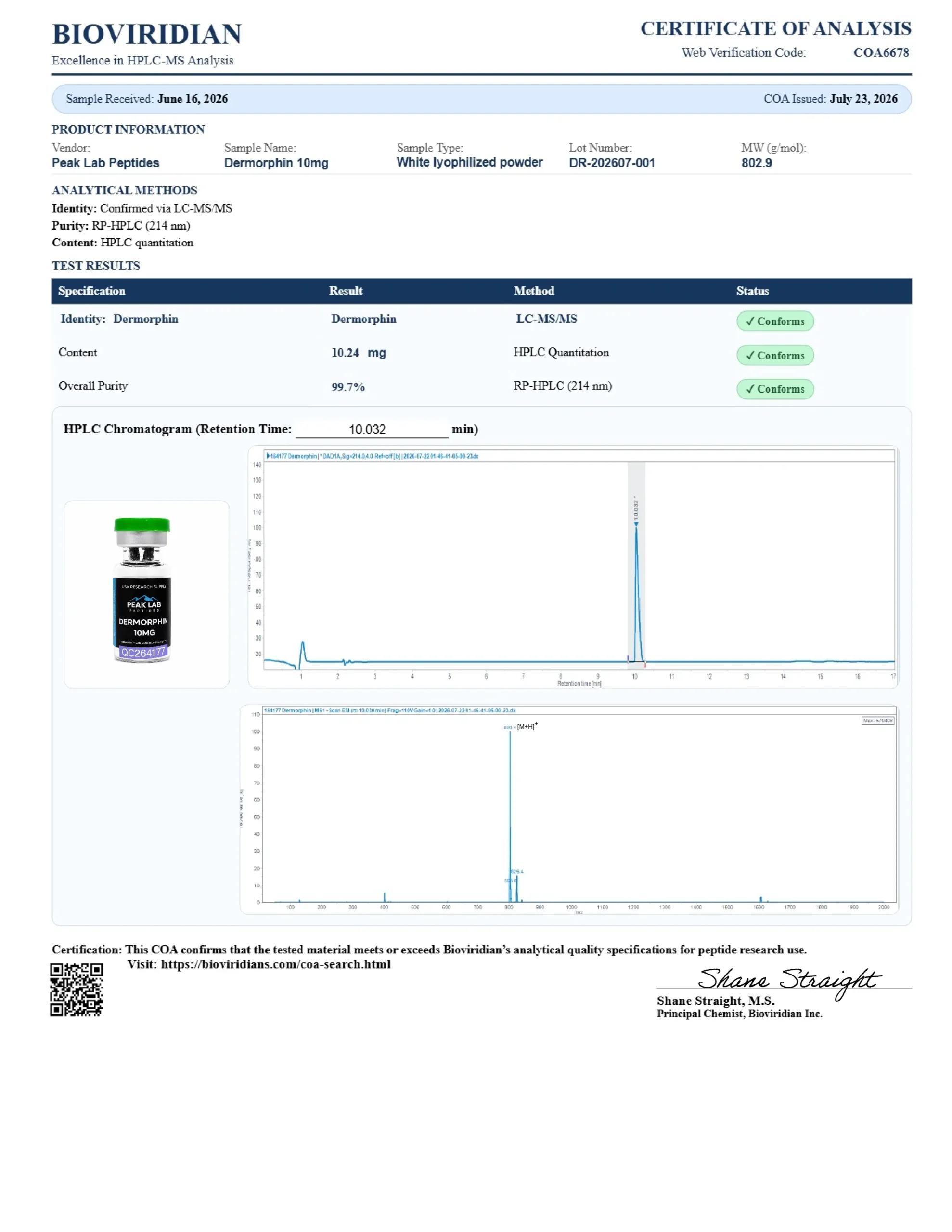
Dermorphin
$149.99 Original price was: $149.99.$120.99Current price is: $120.99.
In stock
Become a Member and save 20% on Every Order.
Description
Dermorphin peptide Details
Dermorphin is a naturally derived opioid research peptide originally isolated from the skin secretions of the amphibian Phyllomedusa sauvagei. In laboratory research settings, Dermorphin is studied as a μ-opioid receptor (MOR)–selective peptide ligand, notable for its unique structural features and receptor-binding characteristics.
The peptide contains a D-amino acid (D-Ala) within its sequence, a modification that is uncommon in vertebrate peptides and of particular interest in studies of peptide stability, receptor affinity, and enzymatic resistance. In preclinical research models, Dermorphin is utilized as a molecular tool for investigating opioid receptor signaling, neuropeptide–receptor interactions, and structure–function relationships within controlled experimental systems.
Dermorphin is supplied exclusively for scientific and laboratory research use. It is not intended for human or veterinary consumption, clinical investigation, diagnostic use, or therapeutic application.
About Dermorphin peptide
Chemical Identity & Classification
- Opioid neuropeptide research compound
- Amphibian-derived peptide (synthetic analogue)
- μ-opioid receptor–selective ligand
Why Researchers Study Dermorphin
- To investigate μ-opioid receptor binding and signaling specificity
- To study the impact of D-amino acids on peptide stability and activity
- To explore neuropeptide structure–function relationships
Key Research Systems & Pathways
- μ-opioid receptor (MOR) signaling
- G-protein–coupled receptor (GPCR) pathways
- Neuropeptide processing and precursor biology
- Enzymatic degradation resistance mechanisms
Dermorphin is synthesized under controlled laboratory conditions to ensure high purity, structural integrity, and reproducibility for preclinical research.
Dermorphin peptide Scientific Research
Mechanism of Action & Pathways
In experimental models, Dermorphin is studied for its high-affinity interaction with μ-opioid receptors, leading to activation of Gi/Go protein–coupled signaling pathways. These pathways regulate intracellular second messengers such as cyclic AMP and ion channel activity, providing insight into opioid receptor pharmacology and signal transduction dynamics.
Cellular & Molecular Research
Dermorphin is utilized in laboratory studies examining:
- Opioid receptor binding kinetics and selectivity
- GPCR-mediated intracellular signaling cascades
- Peptide stability and resistance to enzymatic degradation
All investigations are conducted in controlled in vitro or biochemical assay environments.
Neurobiology & Peptide Processing Research
Research applications may include:
- Neuropeptide precursor synthesis and processing studies
- Central nervous system signaling models
- Comparative analysis of L- vs. D-amino acid–containing peptides
These studies remain exploratory and mechanistic, without therapeutic interpretation.
Experimental Models
- In vitro receptor-binding and signaling assays
- Ex vivo neural tissue studies
- Non-clinical in vivo preclinical research models
All use is strictly limited to laboratory research contexts.
Dermorphin peptide FAQ
What is Dermorphin used for in research?
Dermorphin is used in laboratory research to study μ-opioid receptor signaling, neuropeptide structure–function relationships, and GPCR pharmacology.
What makes Dermorphin structurally unique?
Dermorphin contains a D-amino acid (D-Ala), which is uncommon in vertebrate peptides and of interest for studying peptide stability and receptor interaction.
What receptors are studied using Dermorphin?
Dermorphin is primarily studied for its interaction with the μ-opioid receptor in experimental systems.
Is Dermorphin approved for human or clinical use?
No. Dermorphin is strictly for research use only and is not intended for human consumption, veterinary use, or clinical application.
How should Dermorphin be stored and handled?
Dermorphin should be stored and handled according to standard laboratory peptide storage and handling practices to maintain stability and integrity.
Storage & Handling
All peptides are supplied as sterile, lyophilized powder and are stable when handled correctly.
- On arrival: Store vials in a cool, dry place away from heat and direct sunlight.
- Long-term (powder): For optimal longevity, keep lyophilized peptides refrigerated to help maintain integrity.
- After reconstitution: Use an appropriate research diluent (for example, BAC water). Store the reconstituted solution in the refrigerator and use within 20–30 days for best stability.
Note: Minimize exposure to moisture and repeated freeze–thaw cycles. Follow your institution's safety procedures when handling research materials.
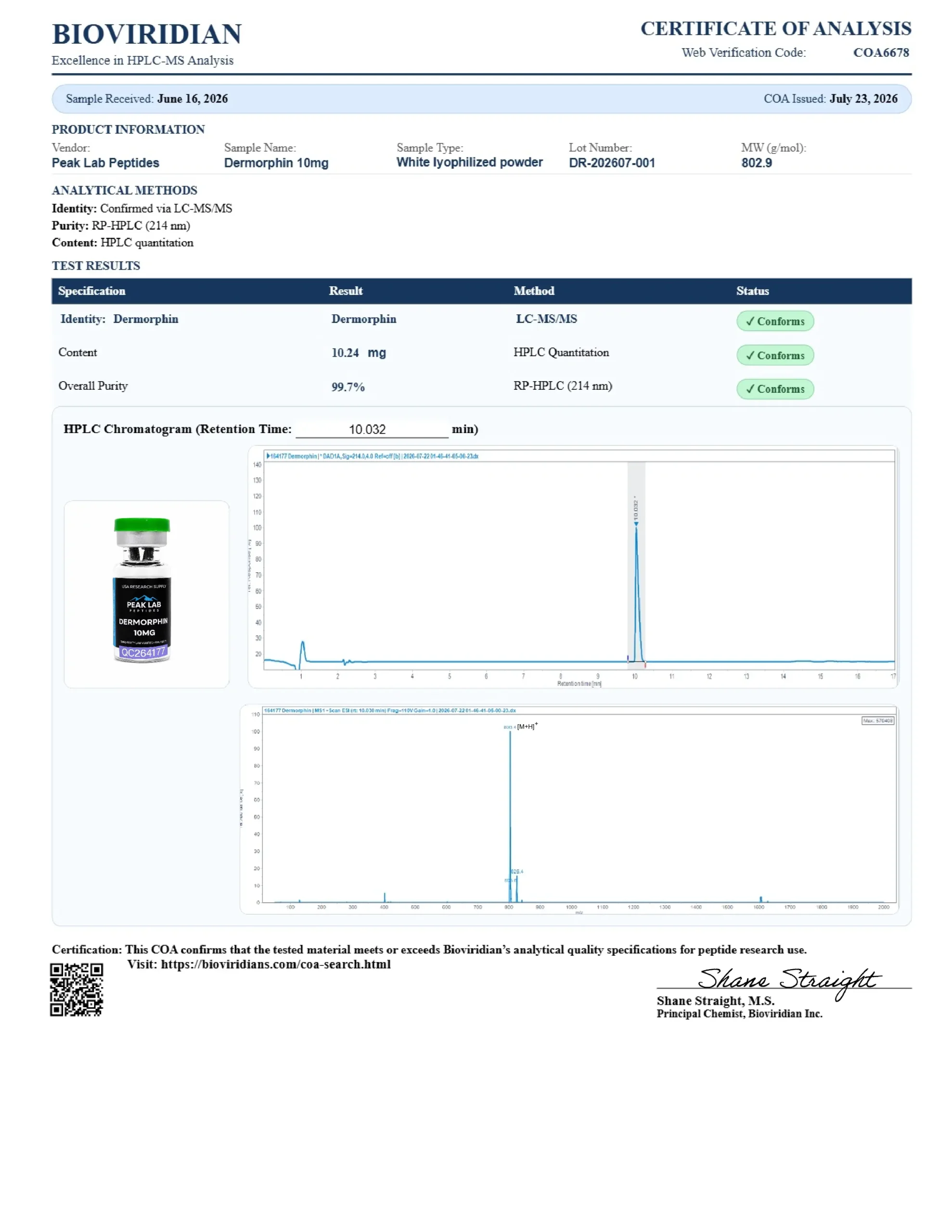
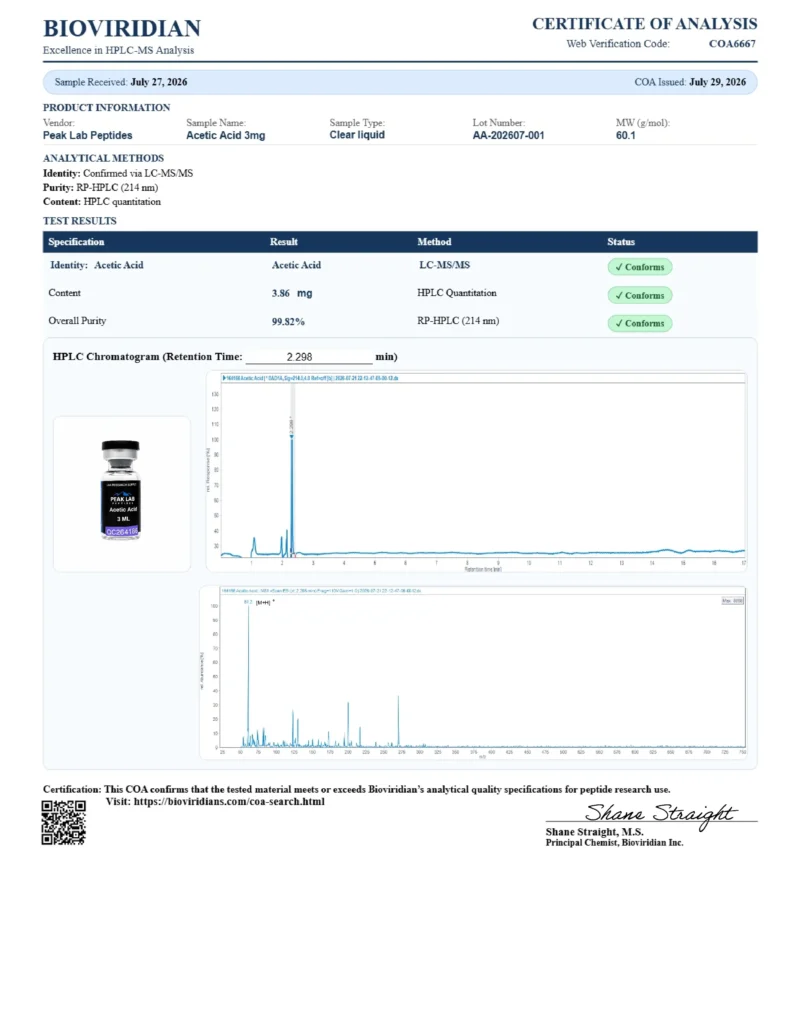
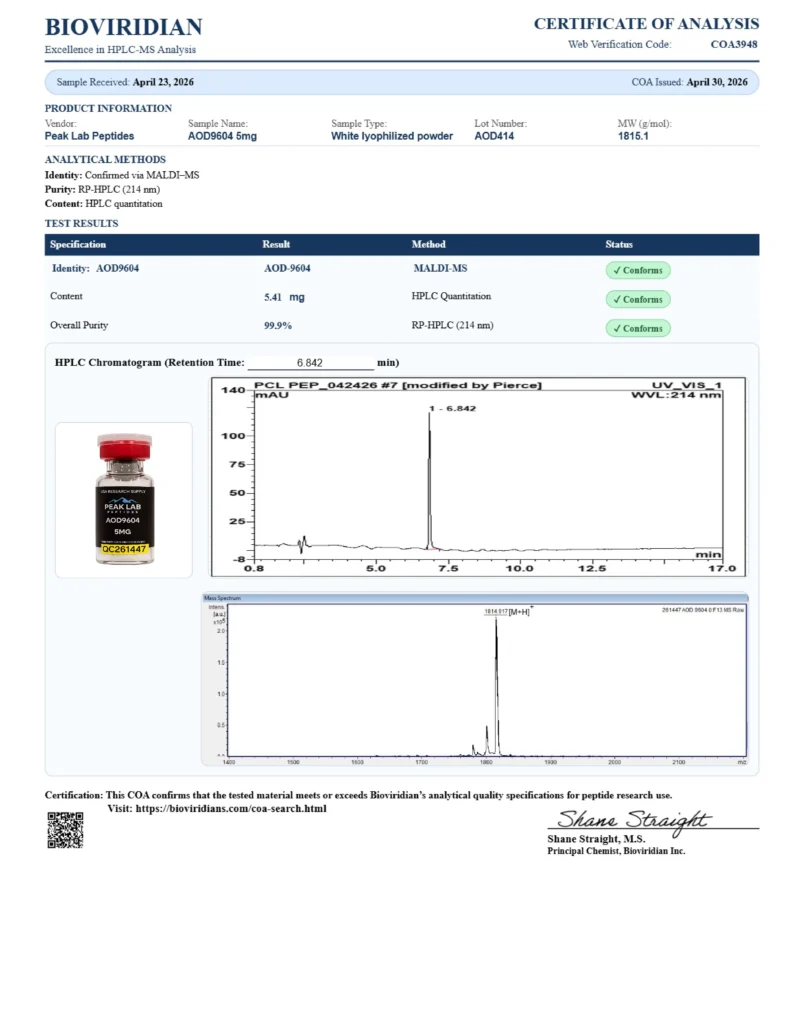
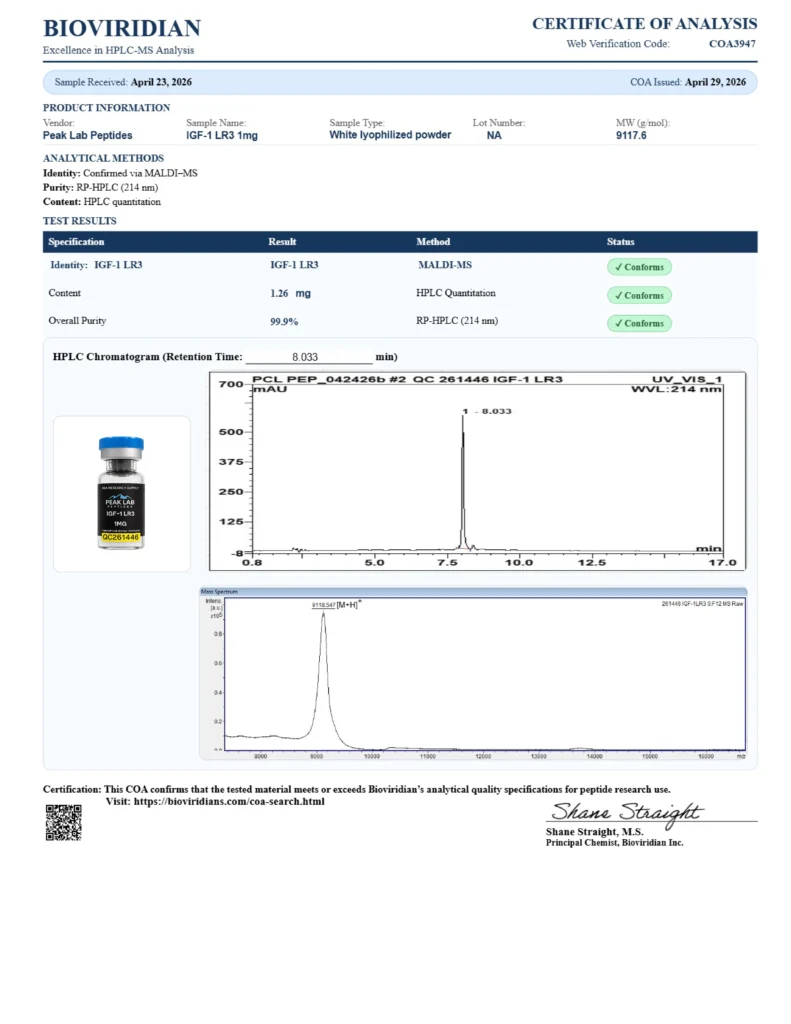
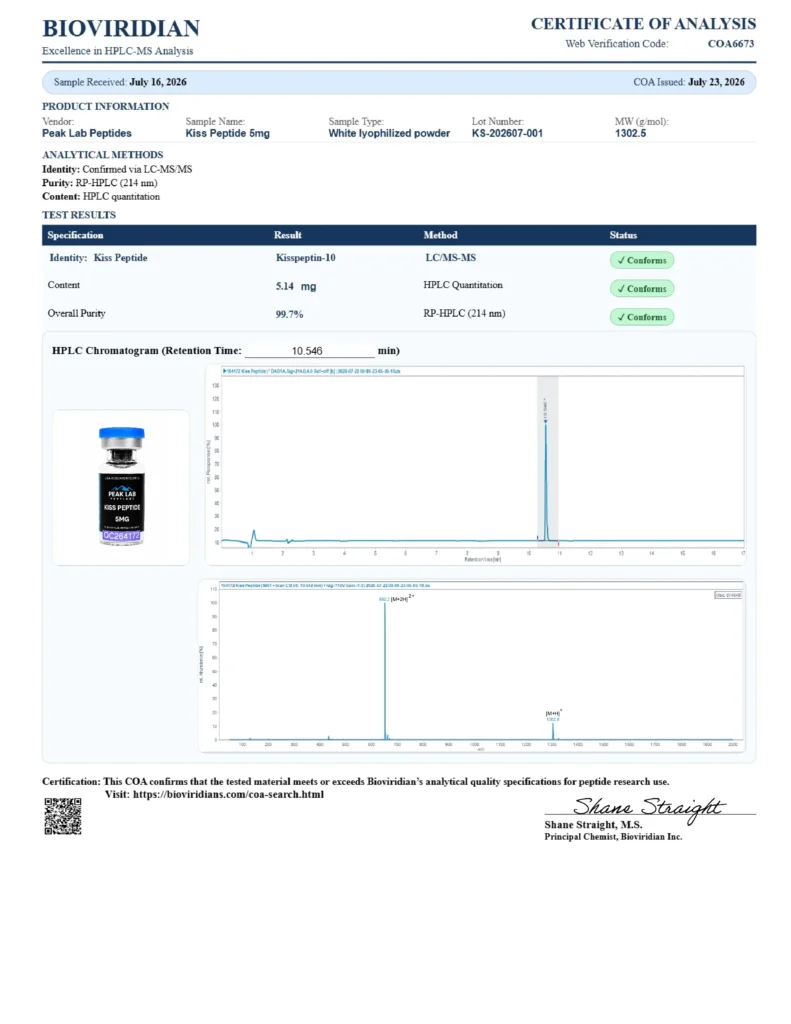
Peak Lab Peptides maintains quality-control processes and routinely performs third-party testing to support purity and identity verification. COAs are available upon request for applicable batches. Documentation may vary depending on production timelines.
We aim to make batch-level documentation available whenever possible. Our goal is to expand COA access across the full catalog as production capacity grows.
All products are for laboratory research use only and are not intended for human consumption.
Related Products
BPC-157
BPC-157
BPC-157 (Body Protection Compound 157) is a synthetic pentadecapeptide studied in preclinical models for its roles in tissue repair signaling, angiogenesis, nitric oxide modulation, and gastrointestinal mucosal research. Supplied as lyophilized powder at 99%+ HPLC verified purity. Batch-specific COA included. For in vitro research use only.
BPC-157, TB-500 – “Wolverine Stack”
BPC-157 and TB-500
BPC-157 + TB-500 – 10mg (Lyophilized Peptide Blend) – For Research Use Only
This advanced research peptide blend combines BPC-157 and TB-500 (Thymosin Beta-4 Fragment) — two well-studied peptides known for their potential in tissue repair, inflammation control, and accelerated recovery.
-
BPC-157 is a synthetic peptide derived from a gastric protein, studied for its possible role in gut health, tendon and ligament repair, and inflammation modulation.
-
TB-500 is a synthetic fragment of Thymosin Beta-4, researched for its potential to promote cell migration, angiogenesis, and muscle recovery.
Together, this combination is highly sought after in research models involving injury recovery, soft tissue repair, and anti-inflammatory studies.
Product Details:
-
Peptides: BPC-157 + TB-500 (5mg each unless otherwise specified)
-
Purity: >98%
-
Form: Lyophilized powder
-
Quantity: 10mg per vial
-
Storage: Store at -4°F (-20°C). After reconstitution, refrigerate at 36–46°F (2–8°C) and use within 30 days.
-
Grade: For research purposes only. Not for human consumption, therapeutic, or diagnostic use.
Potential Research Applications:
-
Injury recovery and soft tissue repair studies
-
Tendon, ligament, and muscle healing models
-
Anti-inflammatory and immune modulation research
-
Angiogenesis and cellular regeneration investigations
For laboratory research only. This product is not intended to diagnose, treat, cure, or prevent any disease.
CJC-1295 No DAC
CJC-1295 No DAC
CJC-1295 No DAC – 5mg (Lyophilized Peptide) – For Research Use Only
CJC-1295 No DAC is a synthetic analog of Growth Hormone-Releasing Hormone (GHRH) designed for research on stimulating natural growth hormone (GH) release in a pulsatile manner. The “No DAC” (Drug Affinity Complex) version has a shorter half-life, allowing it to mimic the body’s natural GH secretion rhythm.
CJC-1295 No DAC is commonly studied in models focused on muscle growth, fat metabolism, anti-aging, and recovery when used alone or stacked with other GH secretagogues like Ipamorelin.
Product Details:
-
Peptide: CJC-1295 No DAC
-
Purity: >98%
-
Form: Lyophilized powder
-
Quantity: 5mg per vial
-
Storage: Store at -4°F (-20°C). After reconstitution, refrigerate at 36–46°F (2–8°C) and use within 30 days.
-
Grade: For research purposes only. Not for human use, medical, or diagnostic applications.
Potential Research Applications:
-
Growth hormone release studies
-
Muscle growth and recovery models
-
Anti-aging and longevity research
-
Fat metabolism and body composition investigations
CJC-1295 No DAC + Ipamorelin – 5mg + 5mg (10mg total)
CJC-1295 No DAC + Ipamorelin
Product Details:
Peptides: CJC-1295 No DAC + Ipamorelin Purity: >98% Form: Lyophilized powder Quantity: 10mg total per vial (typically 5mg of each peptide unless otherwise specified) Storage: Store lyophilized powder at -20°C. Once reconstituted, refrigerate (2–8°C) and use within 30 days. Research Grade: For laboratory research purposes only. Not for human use, therapeutic, or diagnostic applications. Research Applications May Include: Synergistic stimulation of natural GH release Studies on recovery, lean mass, and anti-aging Exploration of GH/GHRH/GHRP axis functionalityDSIP
DSIP (Delta Sleep-Inducing Peptide)
DSIP (Delta Sleep-Inducing Peptide) – 5mg (Lyophilized Powder) – For Research Use Only
DSIP is a naturally occurring neuropeptide studied for its potential role in sleep regulation, stress response, and neuroendocrine function. Originally isolated from the brain, DSIP is of particular interest in research on sleep patterns, circadian rhythm modulation, and stress adaptation mechanisms.
Studies have also explored its potential influence on hormone release, oxidative stress, and neuroprotection.
Product Details:
-
Peptide: DSIP (Delta Sleep-Inducing Peptide)
-
Purity: >98%
-
Form: Lyophilized powder
-
Quantity: 5mg per vial
-
Storage: Store at -4°F (-20°C). After reconstitution, refrigerate at 36–46°F (2–8°C) and use within 30 days.
-
Grade: For research purposes only. Not for human consumption, therapeutic, or diagnostic use.
Potential Research Applications:
-
Sleep regulation and circadian rhythm studies
-
Stress adaptation and cortisol modulation research
-
Neuroprotection and oxidative stress models
-
Endocrine system and hormone balance investigations
For laboratory research only. This product is not intended to diagnose, treat, cure, or prevent any disease.
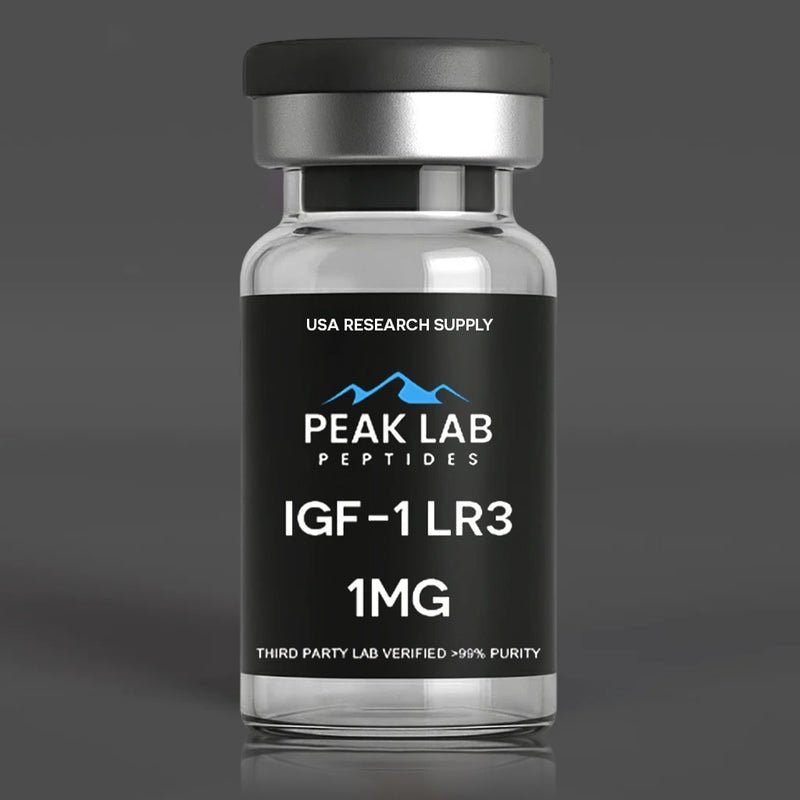
IGF-1 LR3
IGF-1 LR3 1mg – Research Peptide
For Research Use Only – Not for Human Consumption IGF-1 LR3 (Long Arg3 Insulin-Like Growth Factor-1) is a synthetic peptide analog of human IGF-1. It has been modified to extend its half-life in vitro, allowing for enhanced stability and prolonged activity during laboratory testing. The substitution of arginine at position 3 and removal of the first three amino acids in the native IGF-1 sequence make LR3 more resistant to binding proteins, thereby increasing its bioavailability in research environments. Researchers value IGF-1 LR3 for its role in studying cellular growth, differentiation, survival pathways, and metabolic functions. It has been widely used in experimental models to explore muscle cell proliferation, neuroprotection, and regenerative mechanisms. Sequence: 83 amino acids Form: Lyophilized powder Purity: ≥ 98% (HPLC Verified) Unit Size: 1mg vial Storage: Store lyophilized peptide at -4°F. Once reconstituted, keep refrigerated at 36–46°F. ⚠ Disclaimer: All products are sold strictly for laboratory research use only. Not for human use, consumption, or therapeutic applications.Melatonin
Melatonin
Melatonin – 100mg (Lyophilized Powder) – For Research Use Only
Melatonin is a naturally occurring hormone produced by the pineal gland, primarily known for its role in regulating the sleep-wake cycle (circadian rhythm). In research, Melatonin is studied for its potential effects on sleep regulation, antioxidant activity, immune modulation, and neuroprotection.
Studies have also explored its impact on oxidative stress and inflammation in various biological models.
Product Details:
-
Compound: Melatonin (N-Acetyl-5-methoxytryptamine)
-
Purity: >98%
-
Form: Lyophilized powder
-
Quantity: 100mg per vial
-
Storage: Store at -4°F (-20°C). After reconstitution, refrigerate at 36–46°F (2–8°C) and use within 30 days.
-
Grade: For research use only. Not for human consumption or therapeutic use.
Potential Research Applications:
-
Sleep and circadian rhythm studies
-
Antioxidant and oxidative stress research
-
Immune modulation investigations
-
Neuroprotection and anti-aging models
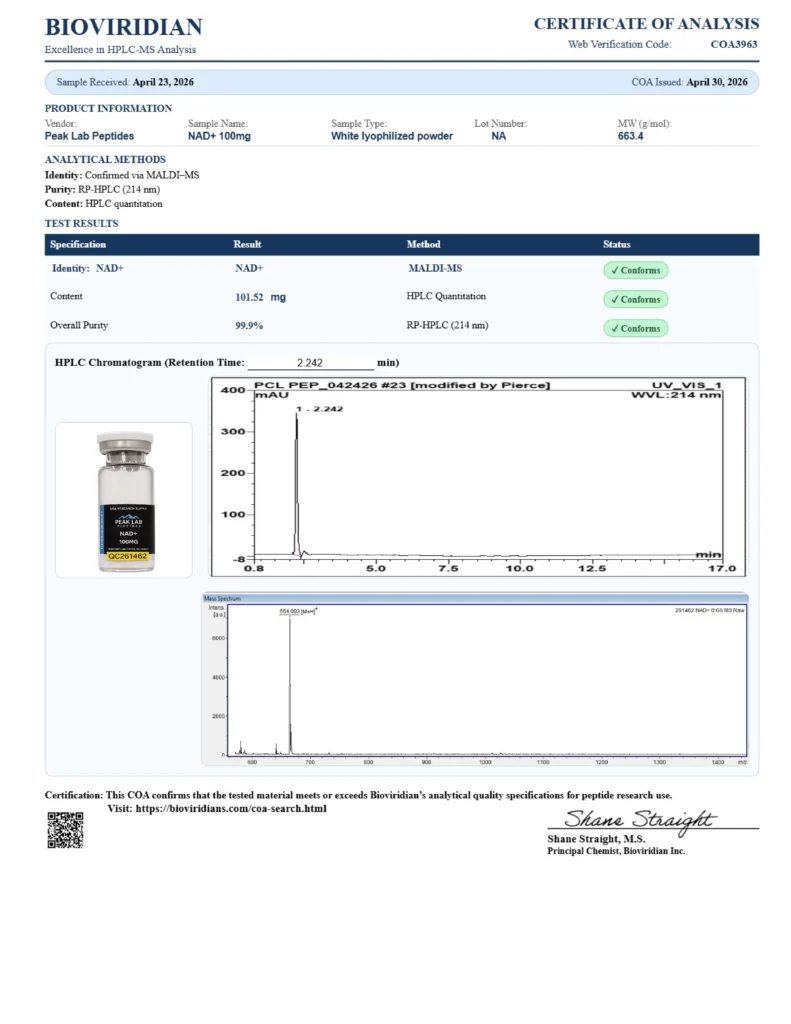
NAD+
NAD+ (Nicotinamide Adenine Dinucleotide)
NAD+ (Nicotinamide Adenine Dinucleotide) – 500mg (Lyophilized Powder) – For Research Use Only
NAD+ is a vital coenzyme found in all living cells, playing a critical role in energy metabolism, mitochondrial function, and cellular repair. It is heavily studied in research models exploring aging, metabolic health, oxidative stress, and neuroprotection.
NAD+ is particularly significant in studies on sirtuin activation, DNA repair pathways, and mitochondrial health, making it a key component of advanced longevity and metabolic research.
Product Details:
-
Compound: NAD+ (Nicotinamide Adenine Dinucleotide)
-
Purity: >98%
-
Form: Lyophilized powder
-
Quantity: 500mg per vial
-
Storage: Store at -4°F (-20°C). After reconstitution, refrigerate at 36–46°F (2–8°C) and use within 30 days.
-
Grade: For research purposes only. Not for human consumption, therapeutic, or diagnostic use.
Potential Research Applications:
-
Mitochondrial function and energy metabolism studies
-
Anti-aging, longevity, and sirtuin pathway research
-
DNA repair and oxidative stress models
-
Neuroprotection and cognitive function investigations
For laboratory research only. This product is not intended to diagnose, treat, cure, or prevent any disease.
Semax
Semax
Product Details:
Compound: Semax Purity: >98% Form: Lyophilized powder Quantity: 5mg or 11mg per vial Storage: Store lyophilized at -20°C. Reconstituted product should be refrigerated (2–8°C) and used within 30 days. Research Grade: For laboratory research only. Not for human consumption or therapeutic use. Research Applications May Include: Studies on neuroprotection and cognitive function Exploration of BDNF modulation Investigations into stroke recovery and brain injury modelsThymosin Alpha-1
Thymosin Alpha-1 (Tα1)
Thymosin Alpha-1 – Research Use Only
Thymosin Alpha-1 – 5mg (Lyophilized Peptide) – For Research Use Only
Thymosin Alpha-1 (Ta1) is a naturally occurring peptide fragment derived from prothymosin alpha, studied for its potential role in immune modulation, inflammation control, and cellular defense mechanisms. It has been of particular interest in research models exploring immune response enhancement, antiviral activity, and immune regulation.
Thymosin Alpha-1 is often studied in relation to immune system support, chronic infection models, and immune deficiency research.
Product Details:
-
Peptide: Thymosin Alpha-1
-
Purity: >98%
-
Form: Lyophilized powder
-
Quantity: 5mg per vial
-
Storage: Store at -4°F (-20°C). After reconstitution, refrigerate at 36–46°F (2–8°C) and use within 30 days.
-
Grade: For research purposes only. Not for human consumption or therapeutic use.
Potential Research Applications:
-
Immune modulation and enhancement studies
-
Chronic infection and antiviral research models
-
Inflammatory response and cytokine regulation studies
-
Immune deficiency and autoimmune condition research