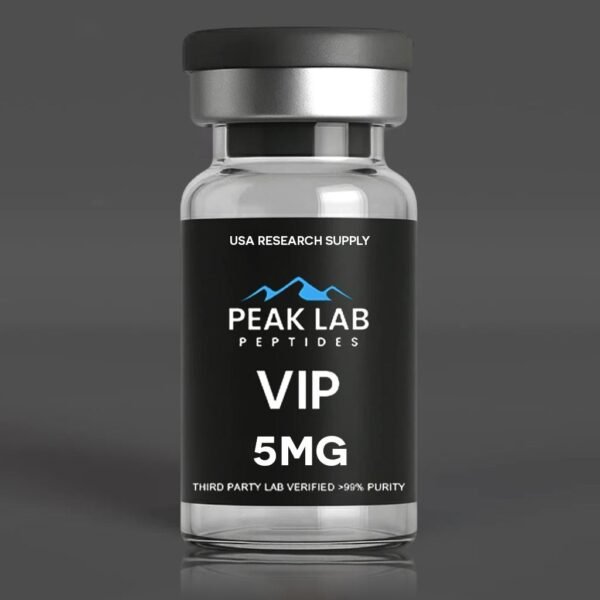
VIP
$85.00 Original price was: $85.00.$69.00Current price is: $69.00.
In stock

In stock
Become a Member and save 20% on Every Order.
Description
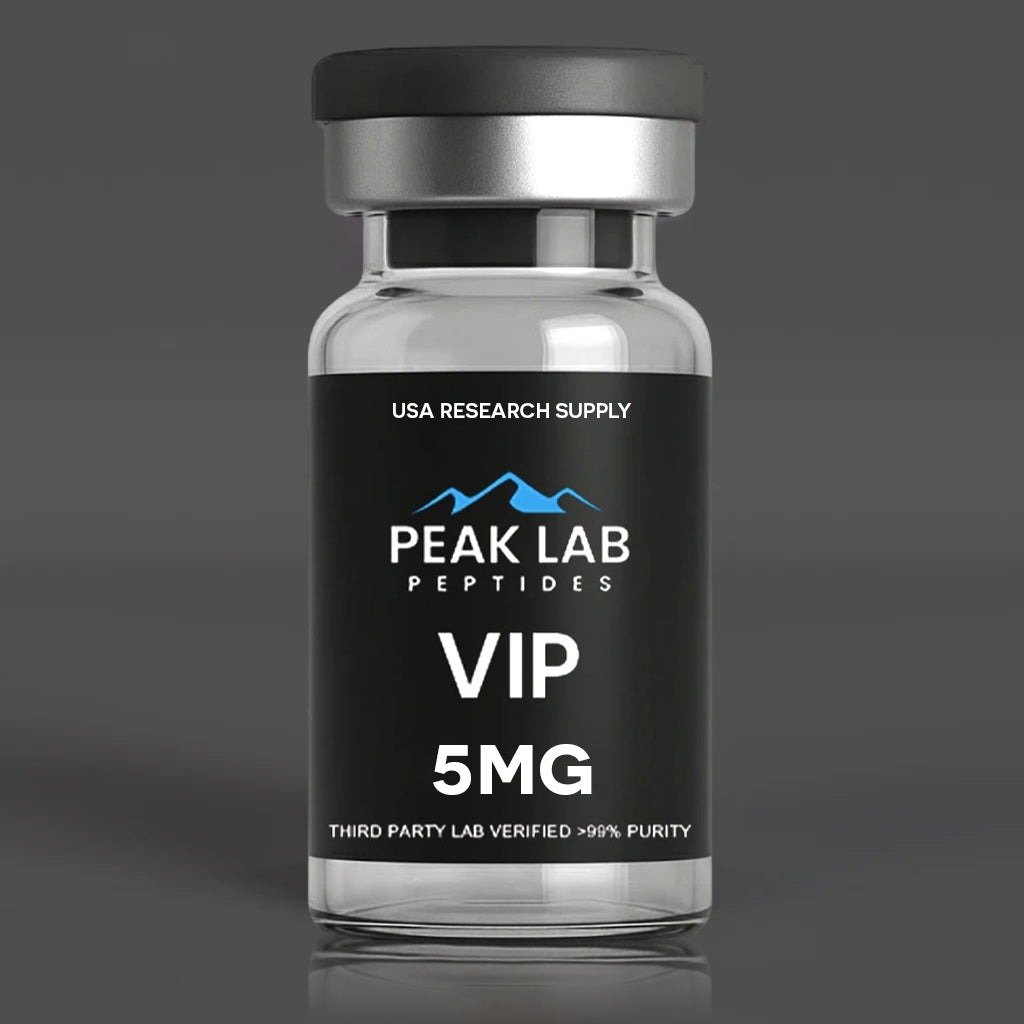
VIP (Vasoactive Intestinal Peptide) – 10mg (Lyophilized Peptide in 3ml Vial) – For Research Use Only
VIP (Vasoactive Intestinal Peptide) is a naturally occurring neuropeptide and immunomodulator studied for its effects on vasodilation, smooth muscle relaxation, immune regulation, and neuroprotection. It plays a crucial role in gastrointestinal, pulmonary, and central nervous system signaling.
In research models, VIP has shown promise in areas such as inflammatory and autoimmune disease, lung function, and gut-brain axis modulation.
Product Details:
Peptide: VIP (Vasoactive Intestinal Peptide)
Purity: >98%
Form: Lyophilized powder
Quantity: 10mg per vial
Vial Size: 3ml sterile glass vial
Storage: Store at -4°F (-20°C). After reconstitution, refrigerate at 36–46°F (2–8°C) and use within 30 days.
Grade: For research purposes only. Not for human consumption, therapeutic, or diagnostic use.
Potential Research Applications:
Neuroprotection and brain-gut axis studies
Pulmonary function and airway inflammation models
Immune system modulation and anti-inflammatory research
Gastrointestinal motility and secretory regulation
For laboratory research only. This product is not intended to diagnose, treat, cure, or prevent any disease
VIP Peptide Research Details
VIP (Vasoactive Intestinal Peptide) is a 28-amino-acid neuropeptide belonging to the secretin/glucagon peptide family. It binds to G protein–coupled receptors VPAC1 and VPAC2 to activate cAMP-dependent signaling pathways that mediate smooth muscle relaxation, vasodilation, immune modulation, and neuroendocrine communication.
VIP is widely used in research models to explore peptide-regulated vascular tone, neuroimmune interactions, epithelial homeostasis, and anti-inflammatory signaling. Its distribution across central and peripheral tissues makes it a versatile tool in both neuroscience and immunophysiology studies.
About VIP Peptide
- Peptide Name: Vasoactive Intestinal Peptide (VIP)
- Sequence: HSDAVFTDNYSRVRSRFLEYSCRKRKQQ-NH₂
- Length: 28 amino acids
- Molecular Weight: ~3,327 Da
- Receptor Targets: VPAC1, VPAC2 (Class B GPCRs)
- Purity: ≥98% (HPLC verified)
- Format: Lyophilized powder, 10mg vial
Use: For laboratory research only, not for clinical or diagnostic use
VIP Peptide Scientific Research
1. Neuroimmune Signaling and Inflammatory Regulation
VIP is used to study cytokine modulation in immune cells including T lymphocytes, macrophages, and dendritic cells. It is involved in downregulating pro-inflammatory mediators (e.g., TNF-α, IL-6) and upregulating anti-inflammatory cytokines like IL-10 in in-vitro and animal models.
2. Vascular and Smooth Muscle Physiology
Through VPAC1/VPAC2 activation, VIP induces relaxation in smooth muscle tissues such as airway, vascular, and gastrointestinal smooth muscle. These properties are often evaluated in cardiovascular or pulmonary research for assessing vasodilatory and bronchodilatory mechanisms.
3. Epithelial Barrier Integrity
VIP has been studied in gut and respiratory epithelial models where it enhances tight-junction protein expression, aiding in barrier maintenance and regulating permeability. This is relevant in preclinical studies on inflammatory bowel disease (IBD) and respiratory epithelial dysfunction.
4. Neuroprotective and Synaptic Maintenance Studies
VIP has been shown to support neurotrophic factor expression and synaptic homeostasis. It is used in neurodegenerative models and CNS-focused research to evaluate neuroplasticity, synapse maintenance, and neuron-glia signaling.
5. Anti-Fibrotic Pathway Exploration
Preclinical studies indicate that VIP downregulates fibrotic markers in lung and cardiac models, making it useful in research investigating peptide-regulated fibrotic and remodeling processes in chronic disease contexts.
VIP Peptide FAQ
Q: What receptors does VIP target?
A: VIP primarily binds to VPAC1 and VPAC2 receptors, activating cAMP-mediated intracellular signaling cascades.
Q: Is VIP used in cardiovascular research?
A: Yes, due to its potent vasodilatory effects, VIP is often studied for its impact on vascular tone and smooth muscle relaxation.
Q: Does VIP play a role in immune modulation?
A: Yes, VIP has been shown to regulate immune responses by modulating cytokine production and inflammatory signaling.
Q: Can VIP be used in brain research?
A: Absolutely. VIP is involved in neurotrophic signaling, synaptic maintenance, and neuron-glia interactions, making it valuable in CNS-focused research.
Q: Is this peptide intended for clinical use?
A: No. VIP 10mg is strictly for laboratory research and preclinical use. It is not approved for human consumption or therapeutic applications.
Storage & Handling
All peptides are supplied as sterile, lyophilized powder and are stable when handled correctly.- On arrival: Store vials in a cool, dry place away from heat and direct sunlight.
- Long-term (powder): For optimal longevity, keep lyophilized peptides refrigerated to help maintain integrity.
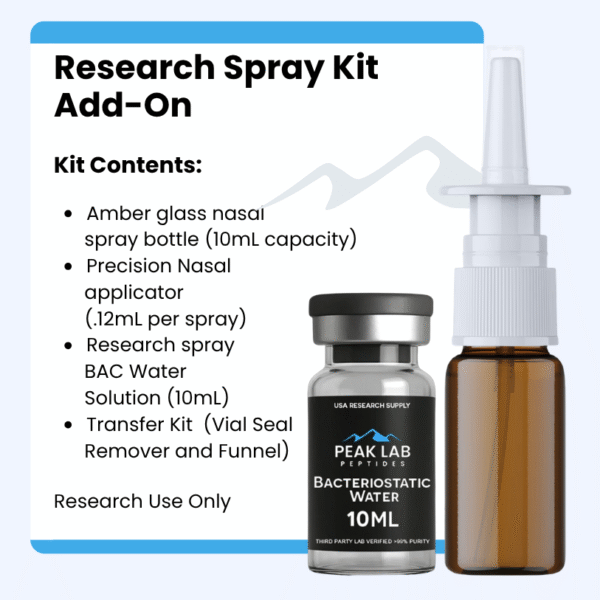
- After reconstitution: Use an appropriate research diluent (for example, BAC water). Store the reconstituted solution in the refrigerator and use within 20–30 days for best stability.
Note: Minimize exposure to moisture and repeated freeze–thaw cycles. Follow your institution's safety procedures when handling research materials.
Storage & Handling
All peptides are supplied as sterile, lyophilized powder and are stable when handled correctly.
- On arrival: Store vials in a cool, dry place away from heat and direct sunlight.
- Long-term (powder): For optimal longevity, keep lyophilized peptides refrigerated to help maintain integrity.
- After reconstitution: Use an appropriate research diluent (for example, BAC water). Store the reconstituted solution in the refrigerator and use within 20–30 days for best stability.
Note: Minimize exposure to moisture and repeated freeze–thaw cycles. Follow your institution's safety procedures when handling research materials.
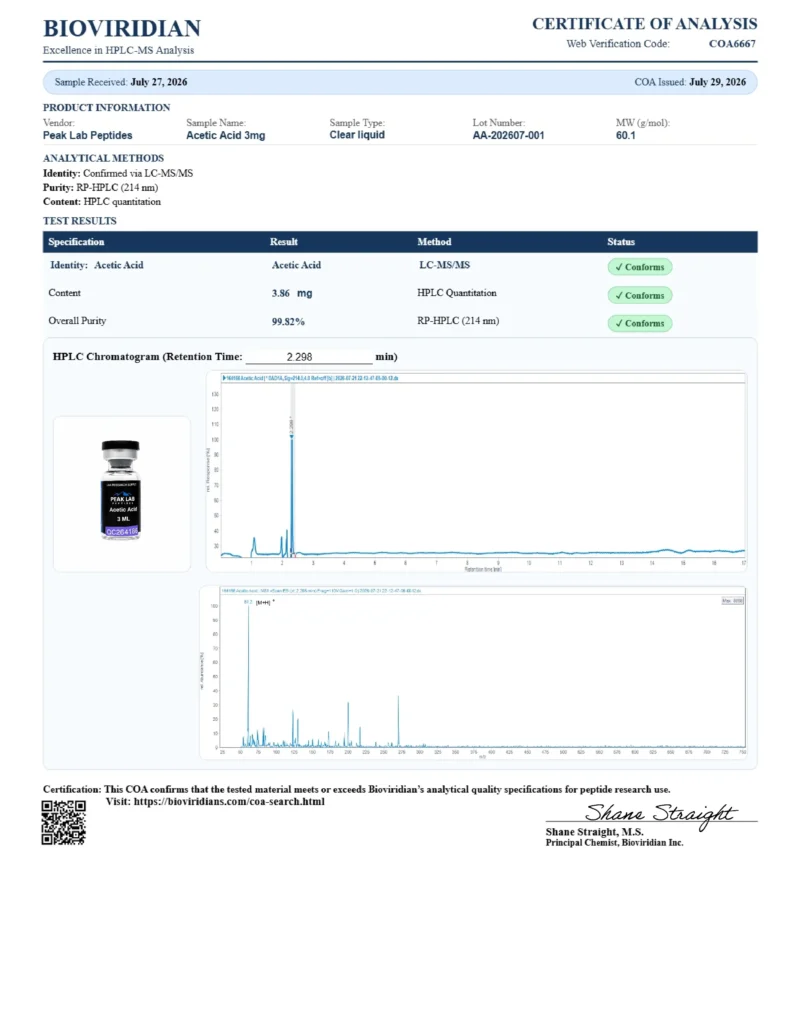
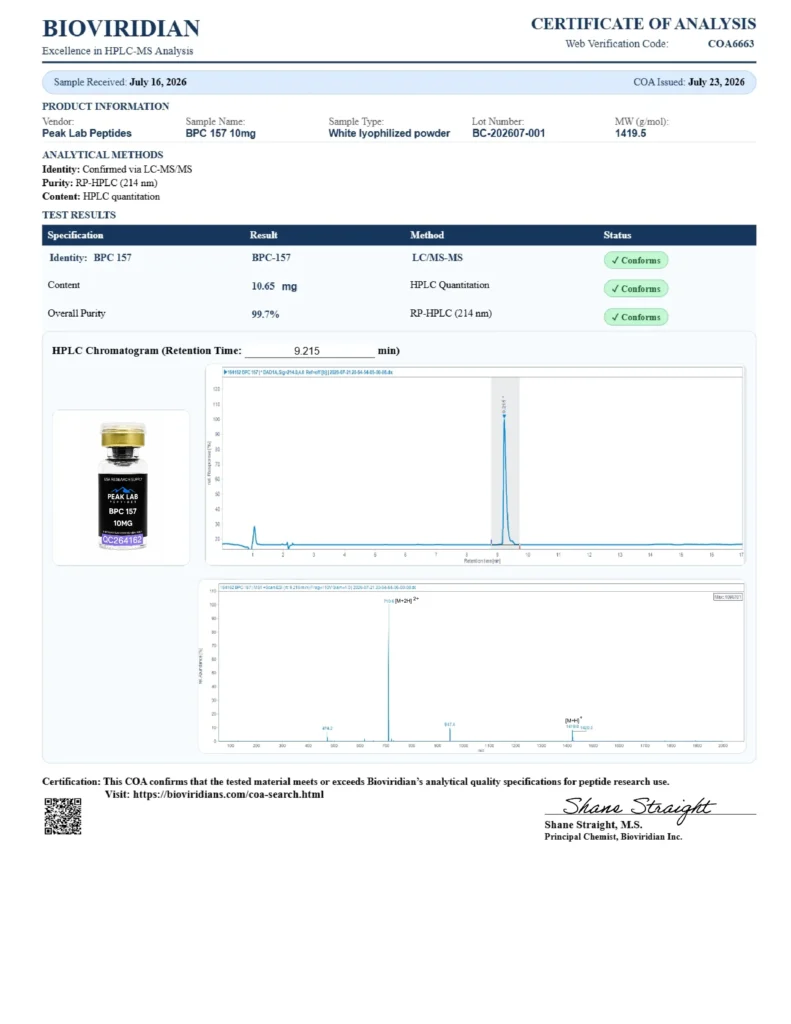
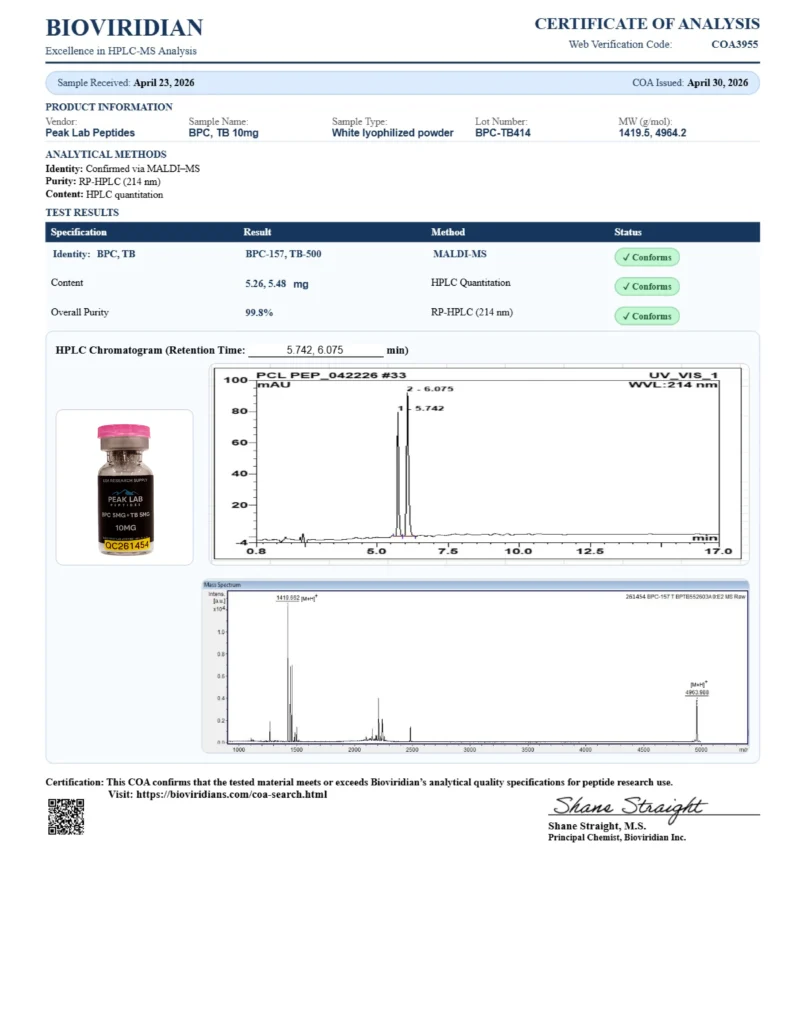
Peak Lab Peptides maintains quality-control processes and routinely performs third-party testing to support purity and identity verification. COAs are available upon request for applicable batches. Documentation may vary depending on production timelines.
We aim to make batch-level documentation available whenever possible. Our goal is to expand COA access across the full catalog as production capacity grows.
All products are for laboratory research use only and are not intended for human consumption.
Related Products
5-amino-1mq
5-Amino-1MQ peptide (5-amino-1-methylquinolinium)
5-Amino-1MQ peptide– Research Use Only
5-Amino-1MQ peptide – 5mg (Lyophilized Powder) – For Research Use Only
5-Amino-1MQ peptide is a small molecule methyltransferase inhibitor studied for its potential impact on cellular metabolism, energy regulation, and fat loss pathways. Research suggests it may inhibit NNMT (Nicotinamide N-Methyltransferase), an enzyme linked to metabolic rate and fat cell energy regulation.
Studies have explored 5-Amino-1MQ peptide for its potential role in increasing NAD+ levels, enhancing energy expenditure, and promoting fat metabolism in various models.
Product Details:
-
Compound: 5-Amino-1MQ (5-Amino-1-Methylquinolinium)
-
Purity: >98%
-
Form: Lyophilized powder
-
Quantity: 50mg per vial
-
Storage: Store at -4°F (-20°C). After reconstitution, refrigerate at 36–46°F (2–8°C) and use within 30 days.
-
Grade: For research use only. Not for human consumption or therapeutic use.
Potential Research Applications:
-
Studies on NNMT inhibition and metabolic regulation
-
NAD+ production and energy pathway research
-
Fat metabolism and weight loss models
-
Investigations into cellular energy expenditure
BPC-157 10-Vial Kit
BPC-157 10 vial kit
BPC-157 10 vial kit (Body Protection Compound 157) is a synthetic pentadecapeptide studied in preclinical models for its roles in tissue repair signaling, angiogenesis, nitric oxide modulation, and gastrointestinal mucosal research. Supplied as lyophilized powder at 99%+ HPLC verified purity. Batch-specific COA included. For in vitro research use only.
CJC-1295 No DAC + Ipamorelin – 10-Vial Kit
CJC-1295 No DAC + Ipamorelin 10 vial kit
Product Details:
Peptides: CJC-1295 No DAC + Ipamorelin 10 vial kit Purity: >98% Form: Lyophilized powder Quantity: 10mg total per vial (typically 5mg of each peptide unless otherwise specified) Storage: Store lyophilized powder at -20°C. Once reconstituted, refrigerate (2–8°C) and use within 30 days. Research Grade: For laboratory research purposes only. Not for human use, therapeutic, or diagnostic applications. Research Applications May Include: Synergistic stimulation of natural GH release Studies on recovery, lean mass, and anti-aging Exploration of GH/GHRH/GHRP axis functionalityCJC-1295 with DAC
CJC-1295 with DAC
CJC-1295 with DAC – 5mg (Lyophilized Peptide) – For Research Use Only
CJC-1295 with DAC (Drug Affinity Complex) is a long-acting analog of Growth Hormone-Releasing Hormone (GHRH), designed to promote sustained release of growth hormone (GH) in research models. The DAC modification significantly extends its half-life, allowing for prolonged activity and making it ideal for studies on muscle growth, recovery, anti-aging, and fat metabolism.
CJC-1295 with DAC is often paired in research with peptides like Ipamorelin for synergistic GH axis stimulation.
Product Details:
-
Peptide: CJC-1295 with DAC
-
Purity: >98%
-
Form: Lyophilized powder
-
Quantity: 5mg per vial
-
Storage: Store at -4°F (-20°C). After reconstitution, refrigerate at 36–46°F (2–8°C) and use within 30 days.
-
Grade: For research purposes only. Not for human consumption, therapeutic, or diagnostic use.
Potential Research Applications:
-
Sustained growth hormone release studies
-
Muscle growth, recovery, and anti-aging research models
-
Fat metabolism and body composition investigations
-
Long-acting GHRH analog research
For laboratory research only. This product is not intended to diagnose, treat, cure, or prevent any disease.
DSIP
DSIP Peptide (Delta Sleep-Inducing Peptide)
DSIP Peptide (Delta Sleep-Inducing Peptide) – 5mg (Lyophilized Powder) – For Research Use Only
DSIP is a naturally occurring neuropeptide studied for its potential role in sleep regulation, stress response, and neuroendocrine function. Originally isolated from the brain, DSIP is of particular interest in research on sleep patterns, circadian rhythm modulation, and stress adaptation mechanisms.
Studies have also explored its potential influence on hormone release, oxidative stress, and neuroprotection.
Product Details:
-
Peptide: DSIP (Delta Sleep-Inducing Peptide)
-
Purity: >98%
-
Form: Lyophilized powder
-
Quantity: 5mg per vial
-
Storage: Store at -4°F (-20°C). After reconstitution, refrigerate at 36–46°F (2–8°C) and use within 30 days.
-
Grade: For research purposes only. Not for human consumption, therapeutic, or diagnostic use.
Potential Research Applications:
-
Sleep regulation and circadian rhythm studies
-
Stress adaptation and cortisol modulation research
-
Neuroprotection and oxidative stress models
-
Endocrine system and hormone balance investigations
For laboratory research only. This product is not intended to diagnose, treat, cure, or prevent any disease.
GHK-Cu
GHK-Cu 10-Vial Kit
Peptide Storage Case (3ml x 6) — Hard Shell Compact Organizer
A compact solution for organizing and protecting your research materials.
This hard shell peptide storage case is designed to securely hold up to 6 standard 3ml vials, with a precision-fit interior that keeps each vial stable and separated.
Smaller and more portable than our full-size case, this version is ideal for streamlined setups, travel, or keeping frequently used materials organized.
Key Features:
- Custom-fit layout: Holds 6 × 3ml vials
- Hard shell exterior: Durable, impact-resistant protection
- Secure closure: Keeps contents safely contained
- Precision interior insert: Reduces movement and vibration
- Compact & portable: Perfect for minimal setups or travel
Designed for clean organization and reliable protection in any research environment.
Important:
- For research use only. Not for human consumption.
- Vials not included
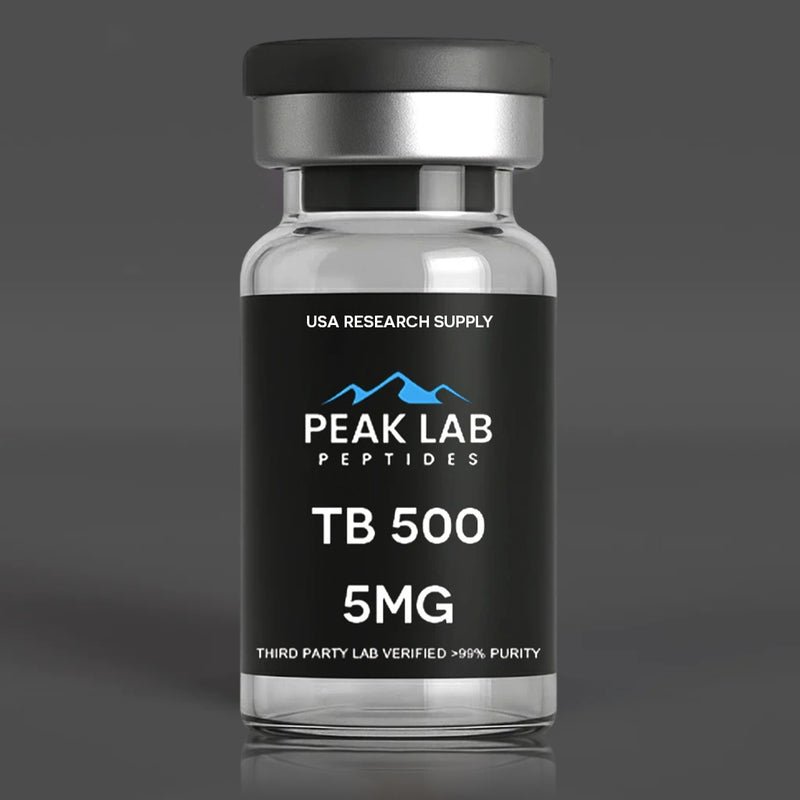
TB-500
TB-500 (TB500)
TB-500 (Thymosin Beta-4 Fragment) – 5mg or 10mg (Lyophilized Peptide) – For Research Use Only
TB-500 is a synthetic Thymosin Beta-4 fragment studied in preclinical models for its roles in actin-binding dynamics, cell migration, angiogenesis, and tissue repair signaling. Supplied as lyophilized powder at 99%+ HPLC verified purity. Batch-specific COA included. For in vitro research use only.
Thymosin Alpha-1
Thymosin Alpha-1 (Tα1)
Thymosin Alpha-1 – Research Use Only
Thymosin Alpha-1 – 5mg (Lyophilized Peptide) – For Research Use Only
Thymosin Alpha-1 (Ta1) is a naturally occurring peptide fragment derived from prothymosin alpha, studied for its potential role in immune modulation, inflammation control, and cellular defense mechanisms. It has been of particular interest in research models exploring immune response enhancement, antiviral activity, and immune regulation.
Thymosin Alpha-1 is often studied in relation to immune system support, chronic infection models, and immune deficiency research.
Product Details:
-
Peptide: Thymosin Alpha-1
-
Purity: >98%
-
Form: Lyophilized powder
-
Quantity: 5mg per vial
-
Storage: Store at -4°F (-20°C). After reconstitution, refrigerate at 36–46°F (2–8°C) and use within 30 days.
-
Grade: For research purposes only. Not for human consumption or therapeutic use.
Potential Research Applications:
-
Immune modulation and enhancement studies
-
Chronic infection and antiviral research models
-
Inflammatory response and cytokine regulation studies
-
Immune deficiency and autoimmune condition research