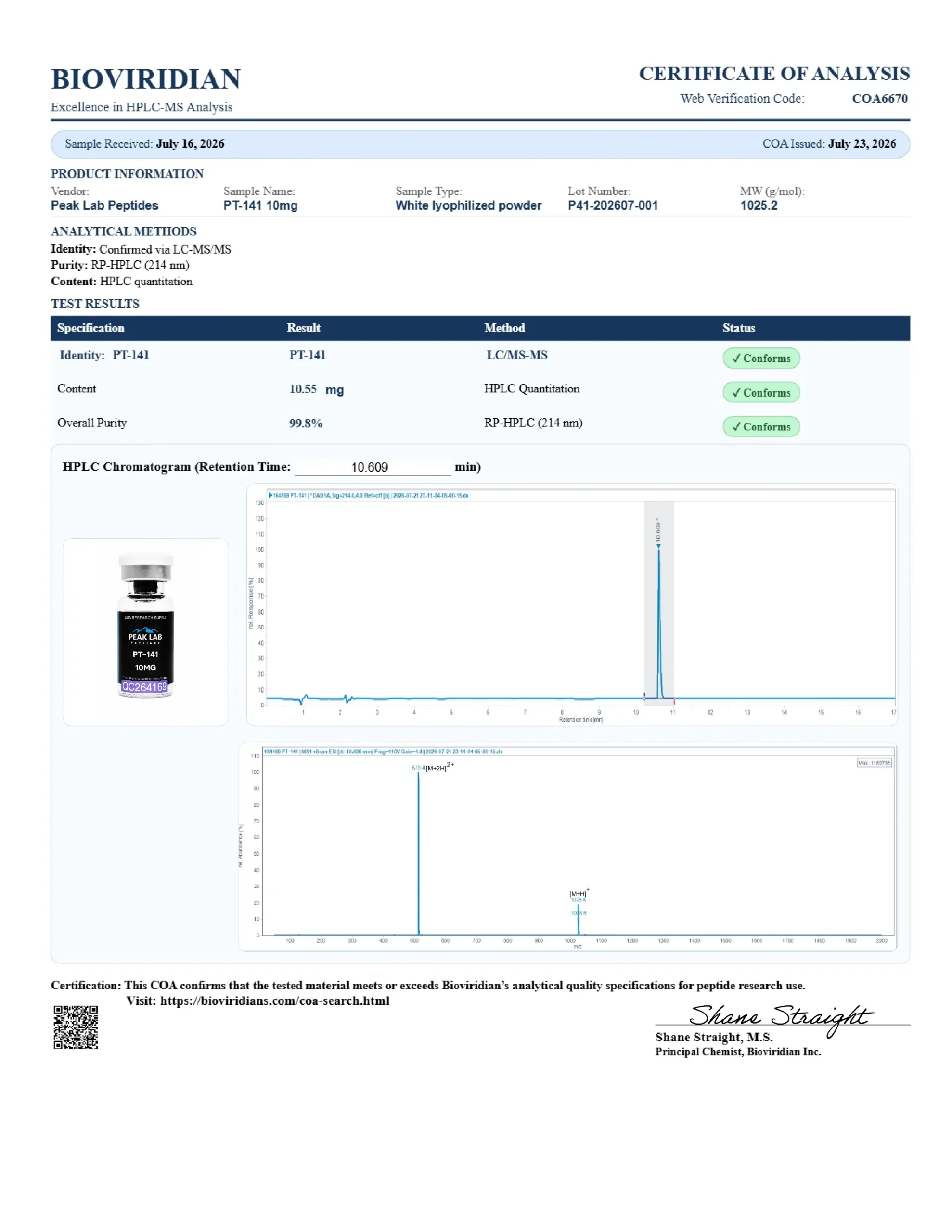
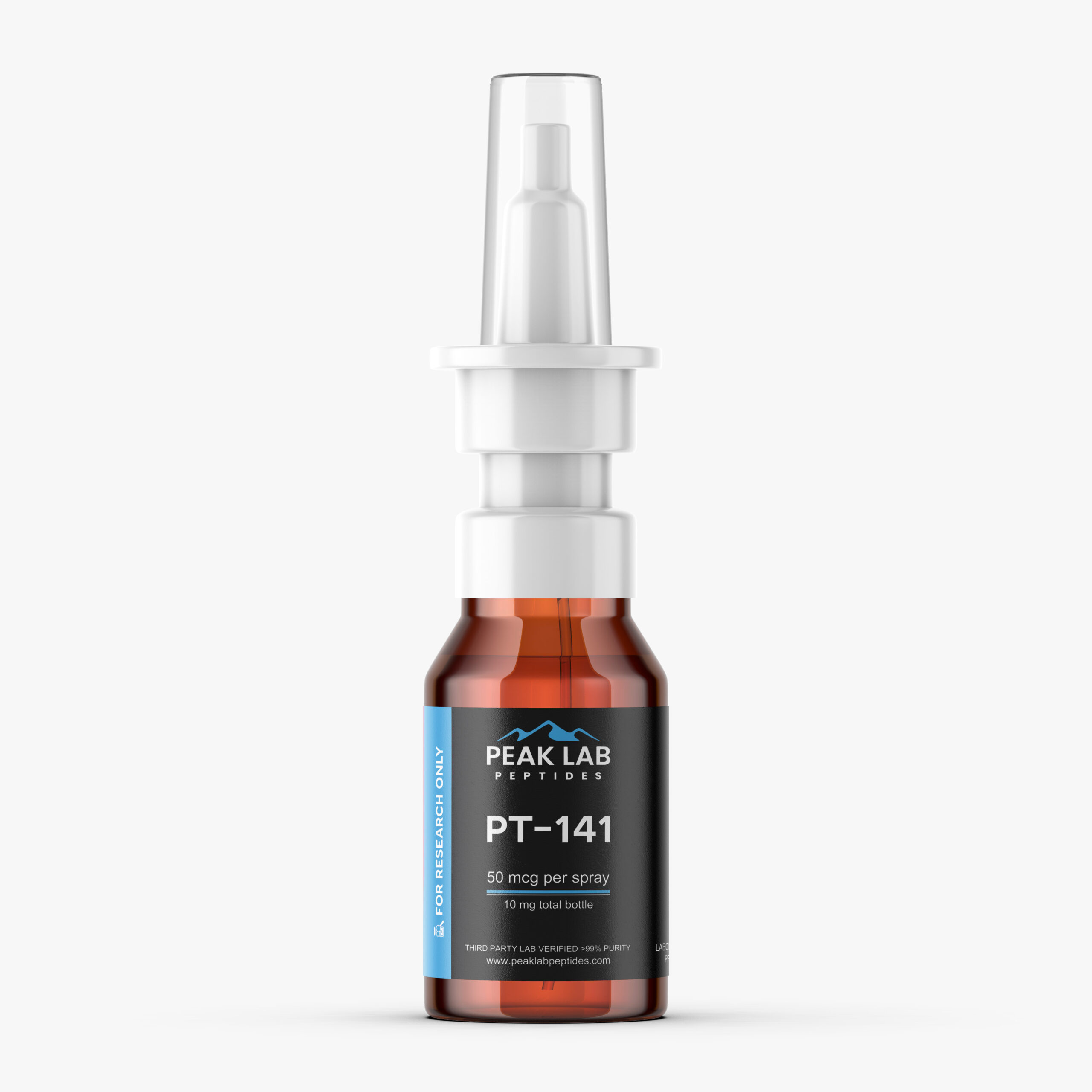
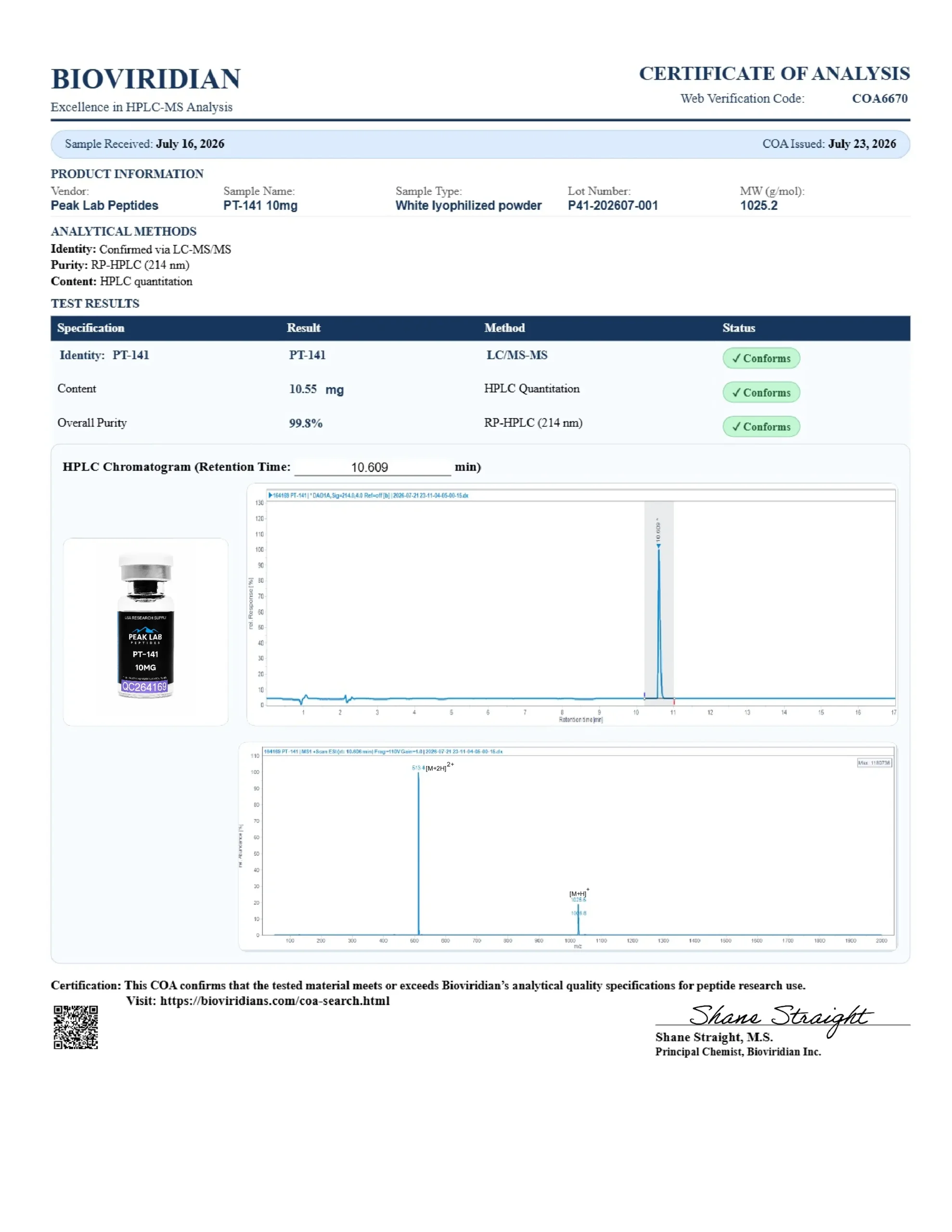
PT-141 10mg Nasal Spray
$138.00 Original price was: $138.00.$111.00Current price is: $111.00.
Become a Member and save 20% on Every Order.
Description
PT-141 (Bremelanotide)
PT-141 (Bremelanotide) – 10mg (Lyophilized Peptide) – For Research Use Only
PT-141 (Bremelanotide) is a synthetic peptide analog of alpha-melanocyte-stimulating hormone (α-MSH), studied for its effects on the central melanocortin receptors involved in sexual function, libido, and arousal pathways. Unlike traditional compounds that act on the vascular system, PT-141 is explored in research for its ability to influence sexual behavior and arousal through the central nervous system (CNS).
Product Details:
-
Peptide: PT-141 (Bremelanotide)
-
Purity: >98%
-
Form: Lyophilized powder
-
Quantity: 10mg per vial
-
Storage: Store at -4°F (-20°C). After reconstitution, refrigerate at 36–46°F (2–8°C) and use within 30 days.
-
Grade: For research purposes only. Not for human consumption, therapeutic, or diagnostic use.
Potential Research Applications:
-
Libido and sexual arousal pathway studies
-
Central nervous system (CNS) melanocortin receptor research
-
Neuroendocrine and behavioral response investigations
-
Sexual function and arousal mechanism modeling
For laboratory research use only. This product is not intended to diagnose, treat, cure, or prevent any disease.
THIS IS NOT FOR HUMAN CONSUMPTION. SOLD FOR RESEARCH ONLY!
PT-141 is a synthetic melanocortin receptor agonist derived from the analog Melanotan II. It primarily activates the MC3R and MC4R subtypes of the melanocortin receptor family, making it a valuable compound in studies of neuropeptide signaling, central nervous system modulation, and GPCR-targeted pharmacology. PT-141 is widely utilized in preclinical research to evaluate neuroendocrine function, sexual behavior pathways, and receptor selectivity.
This 10mg formulation is research-grade and prepared under stringent quality control conditions for laboratory use. It supports studies examining ligand–receptor dynamics, signaling cascade activation, and melanocortin-linked cellular responses.
- Structure: Synthetic cyclic heptapeptide related to Melanotan II
- Receptor Targeting: MC3R, MC4R (primary), with documented MC1R activity
- Primary Applications: GPCR activation, CNS signaling, inflammation modulation, pigmentation pathways
- Mechanism of Action: Triggers cAMP and ERK pathways via G-protein-coupled receptor binding
- Purity & Form: Lyophilized peptide, ≥99% HPLC-verified purity
- Melanocortin Receptor Pharmacology
Used to investigate GPCR-mediated signaling, PT-141 allows researchers to explore agonist binding profiles, EC50 behavior, receptor desensitization, and second-messenger responses (e.g., cAMP, phospho-ERK). Its structure makes it suitable for receptor selectivity studies involving MC3R and MC4R. - Central Nervous System (CNS) Pathway Exploration
PT-141 is employed in rodent models to study hypothalamic signaling, neuromodulation, and neuroendocrine axis regulation. Experimental readouts include immediate early genes (IEGs), CREB activation, and behavioral assays linked to hypothalamic and limbic circuits. - Inflammatory Signaling & Immune Modulation
By targeting MC1R, PT-141 is also examined in immune cell models to evaluate macrophage phenotype modulation, cytokine expression profiles, and systemic inflammatory response markers. - Pigmentation & Melanocyte Function
In melanocyte-focused studies, PT-141 is used to map melanocortin pathway effects on melanin production, enzyme regulation, and UV-response signaling through cAMP/PKA/MAPK pathways.
Q: What does PT-141 target in research studies?
A: It targets melanocortin receptors, primarily MC3R and MC4R, involved in CNS, neuroendocrine, and inflammatory signaling.
Q: Is PT-141 used for pigmentation studies?
A: Yes, its activity at MC1R supports studies in melanocyte biology and photobiology research.
Q: Is this the same compound as Bremelanotide?
A: Yes, PT-141 is the research name for Bremelanotide, studied for its melanocortin receptor agonist properties.
Q: What pathways does PT-141 activate?
A: It activates G-protein-coupled signaling cascades including cAMP accumulation and ERK/MAPK phosphorylation.
Q: What type of models is PT-141 used in?
A: Both in-vitro (cell-based) and in-vivo (rodent and animal) models exploring CNS, sexual behavior, inflammation, and receptor pharmacology.
Storage & Handling
All peptides are supplied as sterile, lyophilized powder and are stable when handled correctly.
- On arrival: Store vials in a cool, dry place away from heat and direct sunlight.
- Long-term (powder): For optimal longevity, keep lyophilized peptides refrigerated to help maintain integrity.
- After reconstitution: Use an appropriate research diluent (for example, BAC water). Store the reconstituted solution in the refrigerator and use within 20–30 days for best stability.
Note: Minimize exposure to moisture and repeated freeze–thaw cycles. Follow your institution's safety procedures when handling research materials.
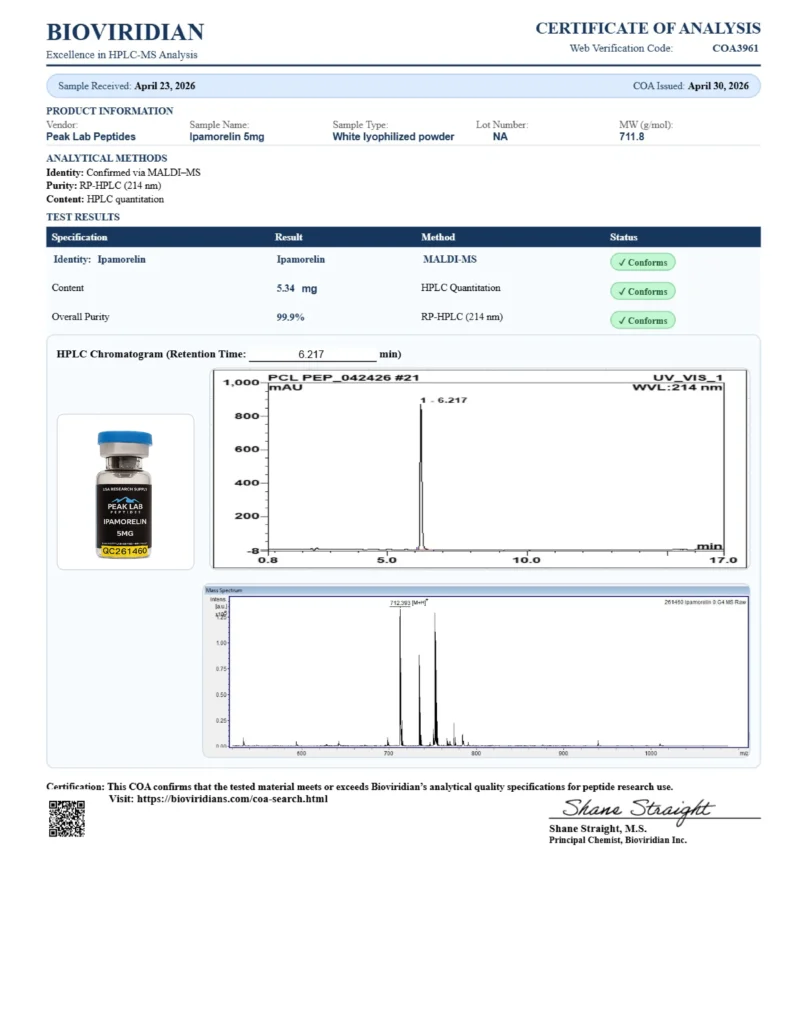
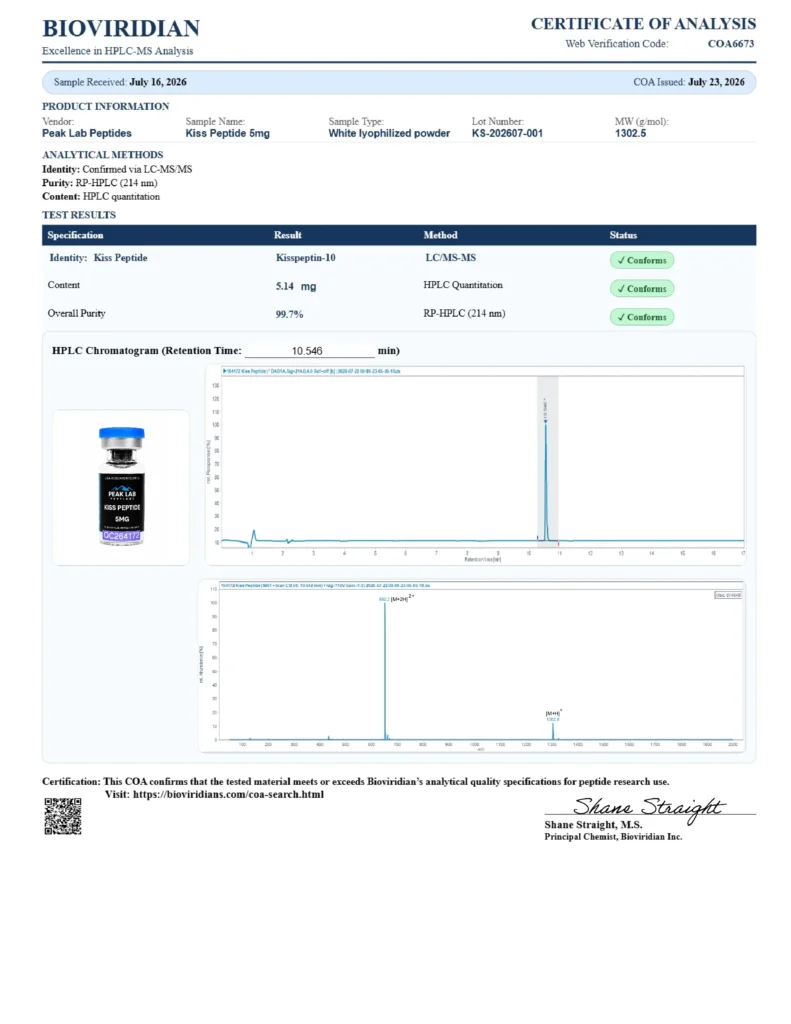
Peak Lab Peptides maintains quality-control processes and routinely performs third-party testing to support purity and identity verification. COAs are available upon request for applicable batches. Documentation may vary depending on production timelines.
We aim to make batch-level documentation available whenever possible. Our goal is to expand COA access across the full catalog as production capacity grows.
All products are for laboratory research use only and are not intended for human consumption.
Related Products
Ara-290 (10mg)
ARA-290 (Cibinetide)
ARA-290 – 10mg (Lyophilized Peptide) – For Research Use Only
ARA-290 is a synthetic peptide derived from erythropoietin (EPO) that is specifically engineered to retain tissue-protective properties without stimulating erythropoiesis. It is widely studied for its potential in anti-inflammatory, neuroprotective, and tissue repair research.
ARA-290 interacts with the innate repair receptor (IRR), making it a promising candidate in research related to chronic inflammation, neuropathic pain, and autoimmune conditions.
Product Details:
-
Peptide: ARA-290
-
Purity: >98%
-
Form: Lyophilized powder
-
Quantity: 10mg per vial
-
Storage: Store at -4°F (-20°C). After reconstitution, refrigerate at 36–46°F (2–8°C) and use within 30 days.
-
Grade: Research use only. Not for human consumption or therapeutic use.
Potential Research Applications:
-
Anti-inflammatory pathway studies
-
Neuropathic pain models
-
Tissue protection and repair research
-
Innate repair receptor (IRR) exploration
B12 (1ml / 1mg)
Vitamin B12 (Cyanocobalamin)
Product Details:
Compound: Cyanocobalamin (Vitamin B12) Concentration: 1mg / 1ml per vial Form: Sterile injectable solution Container: 3ml / 10ml multi-dose vial Storage: Store in a cool, dry place. Refrigerate after opening. Research Grade: For laboratory research purposes only. Not for human consumption or therapeutic use. Research Applications May Include: Studies on energy metabolism and fatigue Neurological repair and neuroprotection research Red blood cell production modelsDSIP Nasal Spray
DSIP (Delta Sleep-Inducing Peptide)
DSIP (Delta Sleep-Inducing Peptide) – 5mg (Lyophilized Powder) – For Research Use Only
DSIP is a naturally occurring neuropeptide studied for its potential role in sleep regulation, stress response, and neuroendocrine function. Originally isolated from the brain, DSIP is of particular interest in research on sleep patterns, circadian rhythm modulation, and stress adaptation mechanisms.
Studies have also explored its potential influence on hormone release, oxidative stress, and neuroprotection.
Product Details:
-
Peptide: DSIP (Delta Sleep-Inducing Peptide)
-
Purity: >98%
-
Form: Lyophilized powder
-
Quantity: 5mg per vial
-
Storage: Store at -4°F (-20°C). After reconstitution, refrigerate at 36–46°F (2–8°C) and use within 30 days.
-
Grade: For research purposes only. Not for human consumption, therapeutic, or diagnostic use.
Potential Research Applications:
-
Sleep regulation and circadian rhythm studies
-
Stress adaptation and cortisol modulation research
-
Neuroprotection and oxidative stress models
-
Endocrine system and hormone balance investigations
For laboratory research only. This product is not intended to diagnose, treat, cure, or prevent any disease.
KissPeptin-10 Nasal Spray
Kisspeptin-10
Kisspeptin-10 – 10mg (Lyophilized Peptide) – For Research Use Only
Kisspeptin-10 is a short-chain peptide fragment of the kisspeptin family, known for its regulatory role in the hypothalamic-pituitary-gonadal (HPG) axis. It is widely studied for its potential to influence GnRH (Gonadotropin-Releasing Hormone) secretion, making it a key subject in research on fertility, reproductive hormone modulation, and endocrine function.
Kisspeptin-10 has also been explored in studies related to puberty onset, reproductive health, and hormone signaling pathways.
Product Details:
-
Peptide: Kisspeptin-10 (Metastin 10 fragment)
-
Purity: >98%
-
Form: Lyophilized powder
-
Quantity: 10mg per vial
-
Storage: Store at -4°F (-20°C). After reconstitution, refrigerate at 36–46°F (2–8°C) and use within 30 days.
-
Grade: For research purposes only. Not for human consumption, therapeutic, or diagnostic use.
Potential Research Applications:
-
Fertility and reproductive hormone studies
-
HPG axis and GnRH secretion models
-
Endocrine signaling and modulation research
-
Studies on puberty and reproductive health
For laboratory research only. This product is not intended to diagnose, treat, cure, or prevent any disease.
Melanotan I Nasal Spray
Melanotan I (MT-1)
MT-1 (Melanotan I) – 10mg (Lyophilized Peptide) – For Research Use Only
Melanotan I (MT-1) is a synthetic analog of the alpha-melanocyte-stimulating hormone (α-MSH),studied for its ability to selectively activate melanocortin-1 (MC1R) receptors, which play a central role in skin pigmentation and melanogenesis. Research has focused on MT-1’s role in melanin production, UV-induced skin response, and photoprotective mechanisms in laboratory models.
Product Details:
-
Peptide: Melanotan I (MT-1)
-
Purity: >98%
-
Form: Lyophilized powder
-
Quantity: 10mg per vial
-
Storage: Store at -4°F (-20°C). After reconstitution, refrigerate at 36–46°F (2–8°C) and use within 30 days.
-
Grade: For research purposes only. Not for human consumption, therapeutic, or diagnostic use.
Potential Research Applications:
-
Melanogenesis and eumelanin production studies
-
UV-response and photoprotection research models
-
Skin pigmentation and MC1R receptor signaling investigations
-
Dermatological and pigmentation pathway research
For laboratory research only. This product is not intended to diagnose, treat, cure, or prevent any disease.
MOTS-c
MOTS-c
MOTS-c – 10mg (Lyophilized Peptide) – For Research Use Only
MOTS-c is a mitochondrial-derived peptide (MDP) encoded by the mitochondrial genome, widely studied for its potential role in metabolic regulation, energy homeostasis, and cellular protection. Research has focused on its ability to influence glucose metabolism, insulin sensitivity, and mitochondrial function, making it a key subject in studies on metabolic health and aging.
MOTS-c is of special interest in research exploring exercise mimetic effects, fat metabolism, and metabolic syndrome models.
Product Details:
-
Peptide: MOTS-c (Mitochondrial Open Reading Frame of the 12S rRNA-c)
-
Purity: >98%
-
Form: Lyophilized powder
-
Quantity: 10mg per vial
-
Storage: Store at -4°F (-20°C). After reconstitution, refrigerate at 36–46°F (2–8°C) and use within 30 days.
-
Grade: For research purposes only. Not for human consumption or therapeutic applications.
Potential Research Applications:
-
Glucose metabolism and insulin sensitivity studies
-
Mitochondrial function and energy regulation research
-
Aging, longevity, and metabolic health models
-
Exercise mimetic and fat metabolism investigations
For laboratory research use only. This product is not intended to diagnose, treat, cure, or prevent any disease.
TB-500
TB-500 (TB500)
TB-500 (Thymosin Beta-4 Fragment) – 5mg or 10mg (Lyophilized Peptide) – For Research Use Only
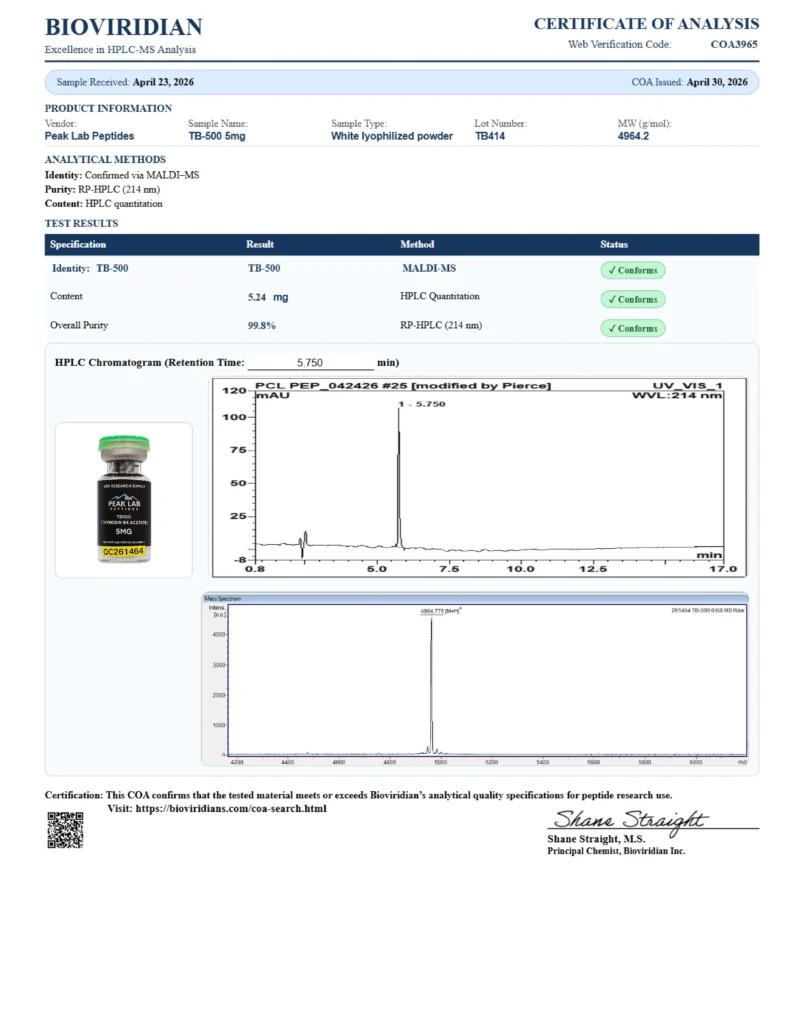
TB-500 is a synthetic Thymosin Beta-4 fragment studied in preclinical models for its roles in actin-binding dynamics, cell migration, angiogenesis, and tissue repair signaling. Supplied as lyophilized powder at 99%+ HPLC verified purity. Batch-specific COA included. For in vitro research use only.
TB-500 Nasal Spray
TB-500 (TB500)
TB-500 (Thymosin Beta-4 Fragment) – 5mg or 10mg (Lyophilized Peptide) – For Research Use Only
TB-500 is a synthetic Thymosin Beta-4 fragment studied in preclinical models for its roles in actin-binding dynamics, cell migration, angiogenesis, and tissue repair signaling. Supplied as lyophilized powder at 99%+ HPLC verified purity. Batch-specific COA included. For in vitro research use only.
Thymosin Alpha-1 Nasal Spray
Thymosin Alpha-1 (Tα1)
Thymosin Alpha-1 – Research Use Only
Thymosin Alpha-1 – 5mg (Lyophilized Peptide) – For Research Use Only
Thymosin Alpha-1 (Ta1) is a naturally occurring peptide fragment derived from prothymosin alpha, studied for its potential role in immune modulation, inflammation control, and cellular defense mechanisms. It has been of particular interest in research models exploring immune response enhancement, antiviral activity, and immune regulation.
Thymosin Alpha-1 is often studied in relation to immune system support, chronic infection models, and immune deficiency research.
Product Details:
-
Peptide: Thymosin Alpha-1
-
Purity: >98%
-
Form: Lyophilized powder
-
Quantity: 5mg per vial
-
Storage: Store at -4°F (-20°C). After reconstitution, refrigerate at 36–46°F (2–8°C) and use within 30 days.
-
Grade: For research purposes only. Not for human consumption or therapeutic use.
Potential Research Applications:
-
Immune modulation and enhancement studies
-
Chronic infection and antiviral research models
-
Inflammatory response and cytokine regulation studies
-
Immune deficiency and autoimmune condition research

Reviews
There are no reviews yet.