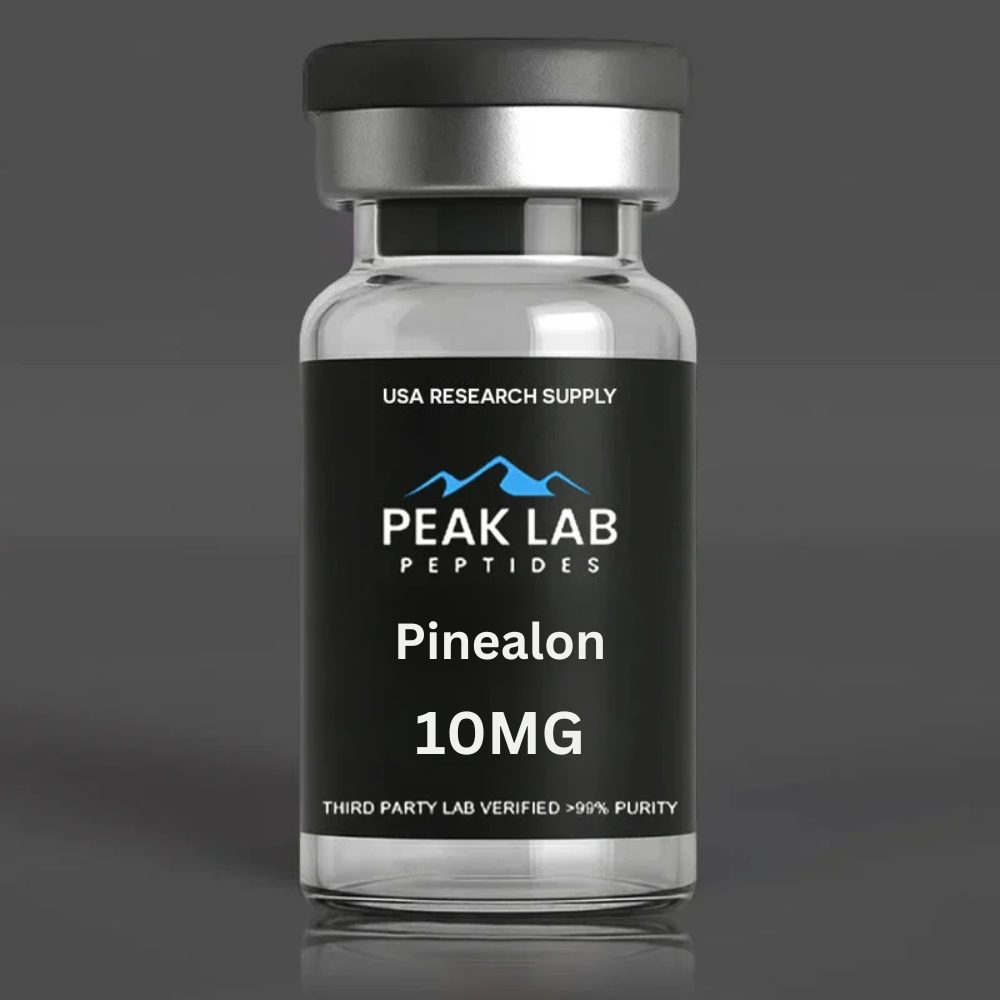
Pinealon
$43.20 – $54.40Price range: $43.20 through $54.40
Become a Member and save 20% on Every Order.
Description
Pinealon is a synthetic tripeptide research compound with the amino acid sequence Glu–Asp–Arg, studied in laboratory settings for its role in neuronal signaling regulation and cellular stress response pathways. In preclinical research models, Pinealon has been examined for its influence on mitochondrial enzyme activity, oxidative stress–associated signaling, and gene expression programs related to neural function.
Experimental investigations utilize Pinealon as a molecular tool to explore peptide-mediated modulation of neuronal differentiation, energy metabolism, and cellular homeostasis under controlled, non-clinical conditions. Its short peptide structure and intracellular activity profile make it suitable for mechanistic studies focused on neurobiological signaling and metabolic regulation.
Pinealon is supplied exclusively for scientific and laboratory research use. It is not intended for human or veterinary consumption, clinical investigation, diagnostic use, or therapeutic application.
Chemical Identity & Classification
- Synthetic tripeptide
- Amino acid sequence: Glu–Asp–Arg
- Neurobiological signaling research compound
Why Researchers Study Pinealon
- To investigate peptide-mediated neuronal differentiation signaling
- To study oxidative stress response mechanisms in neural cells
- To explore mitochondrial function and energy metabolism regulation
Key Research Systems & Pathways
- Mitochondrial enzyme activity and redox regulation
- Oxidative stress–responsive signaling pathways
- Gene expression linked to synaptic plasticity
- Neural cell homeostasis and metabolic control networks
Pinealon is synthesized under controlled laboratory conditions to ensure high purity, molecular accuracy, and reproducibility for preclinical research applications.
Mechanism of Action & Pathways
In experimental models, Pinealon is studied for its interaction with mitochondrial and nuclear signaling pathways involved in regulating oxidative balance and cellular energy status. Research focuses on how the peptide influences enzyme activity, transcriptional regulation, and stress-adaptive signaling within neural cells.
Cellular & Molecular Research
Pinealon is commonly utilized in laboratory studies examining:
- Regulation of mitochondrial metabolic enzymes
- Oxidative stress–associated signaling cascades
- Peptide-driven gene expression modulation
All investigations are conducted in controlled in vitro or biochemical assay environments.
Neurobiology & Energy Metabolism Research
Research applications may include:
- Neuronal differentiation and maturation models
- Synaptic plasticity–related gene expression studies
- Energy metabolism and cellular homeostasis analysis
These investigations remain exploratory and mechanistic, without therapeutic interpretation.
Experimental Models
- In vitro neuronal and molecular assays
- Ex vivo neural tissue studies
- Non-clinical in vivo preclinical research models
All use is strictly limited to laboratory research contexts.
What is Pinealon used for in research?
Pinealon is used in laboratory research to study neuronal signaling, oxidative stress responses, mitochondrial activity, and peptide-mediated metabolic regulation.
What is the peptide sequence of Pinealon?
Pinealon is composed of the tripeptide sequence Glu–Asp–Arg.
Which pathways are commonly studied using Pinealon?
Research commonly focuses on mitochondrial enzyme regulation, oxidative stress signaling, and gene expression linked to neural plasticity.
Is Pinealon approved for human or clinical use?
No. Pinealon is strictly for research use only and is not intended for human consumption, veterinary use, or clinical application.
How should Pinealon be stored and handled?
Pinealon should be stored and handled according to standard laboratory peptide storage and handling practices to maintain stability and integrity.

Storage & Handling
All peptides are supplied as sterile, lyophilized powder and are stable when handled correctly.
- On arrival: Store vials in a cool, dry place away from heat and direct sunlight.
- Long-term (powder): For optimal longevity, keep lyophilized peptides refrigerated to help maintain integrity.
- After reconstitution: Use an appropriate research diluent (for example, BAC water). Store the reconstituted solution in the refrigerator and use within 20–30 days for best stability.
Note: Minimize exposure to moisture and repeated freeze–thaw cycles. Follow your institution's safety procedures when handling research materials.
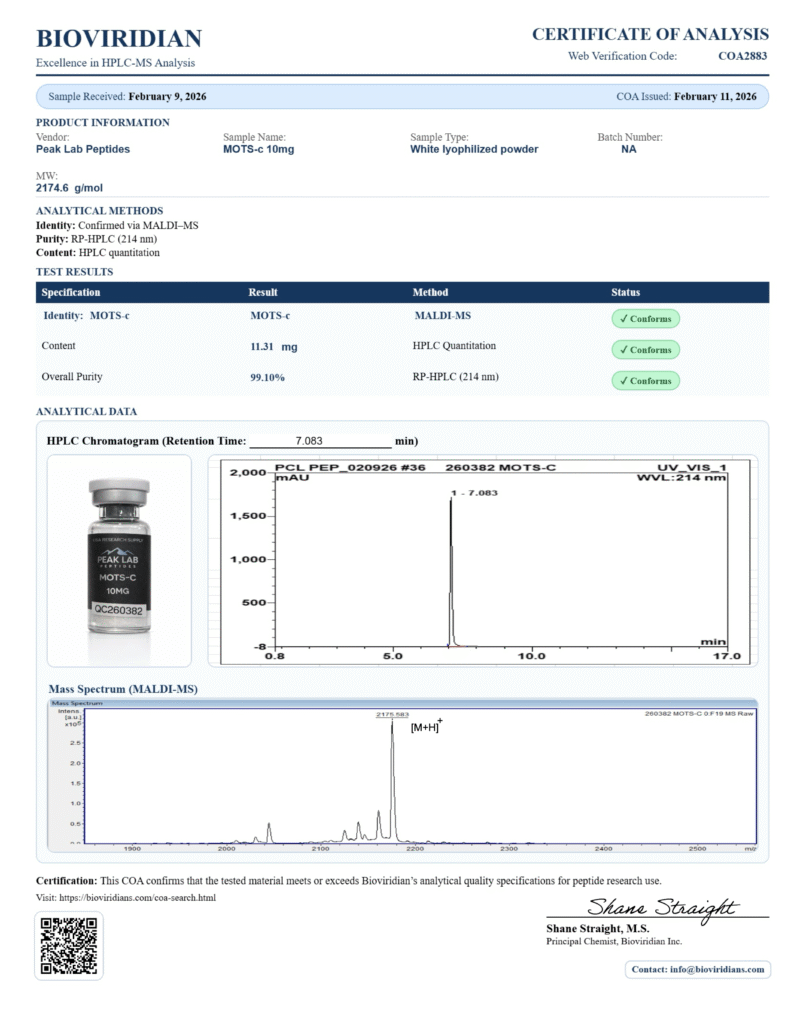
Peak Lab Peptides maintains quality-control processes and routinely performs third-party testing to support purity and identity verification. COAs are available upon request for applicable batches. Documentation may vary depending on production timelines.
We aim to make batch-level documentation available whenever possible. Our goal is to expand COA access across the full catalog as production capacity grows.
All products are for laboratory research use only and are not intended for human consumption.
Related Products
ACE-031
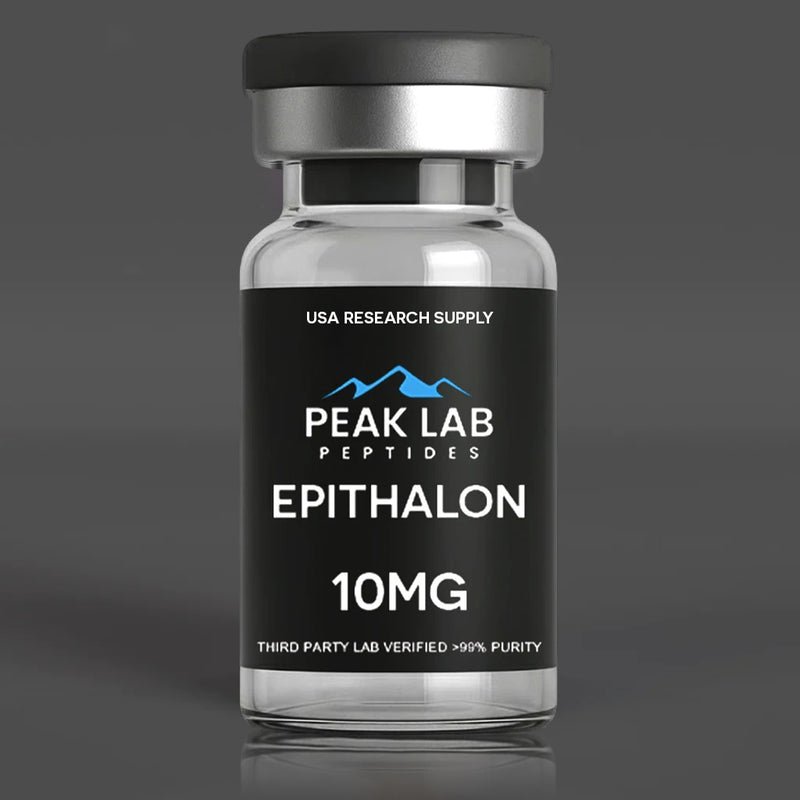
Epithalon
Epithalon – 10mg (Lyophilized Peptide) – For Research Use Only
Epithalon (also known as Epitalon) is a synthetic tetrapeptide (Ala-Glu-Asp-Gly) derived from the naturally occurring pineal gland peptide Epithalamin. It is widely studied for its potential anti-aging, telomerase-activating, and longevity-enhancing effects. Research suggests that Epithalon may promote telomere extension, support circadian rhythm regulation, and improve oxidative stress resistance. It is a popular compound in studies involving cellular aging, pineal gland function, and DNA repair mechanisms. Product Details: Peptide: Epithalon (Ala-Glu-Asp-Gly) Purity: >98% Form: Lyophilized powder Quantity: 10mg per vial Storage: Store at -4°F (-20°C). After reconstitution, refrigerate at 36–46°F (2–8°C) and use within 30 days. Grade: For research purposes only. Not for human consumption, therapeutic, or diagnostic use. Potential Research Applications: Telomerase activation and cellular longevity studies Anti-aging and pineal gland function research Circadian rhythm and melatonin regulation studies DNA repair and oxidative stress resistance models For laboratory research only. This product is not intended to diagnose, treat, cure, or prevent any disease.GHK-Cu
GHRP-6 Acetate
Melatonin
Melatonin
Melatonin – 100mg (Lyophilized Powder) – For Research Use Only
Melatonin is a naturally occurring hormone produced by the pineal gland, primarily known for its role in regulating the sleep-wake cycle (circadian rhythm). In research, Melatonin is studied for its potential effects on sleep regulation, antioxidant activity, immune modulation, and neuroprotection.
Studies have also explored its impact on oxidative stress and inflammation in various biological models.
Product Details:
-
Compound: Melatonin (N-Acetyl-5-methoxytryptamine)
-
Purity: >98%
-
Form: Lyophilized powder
-
Quantity: 100mg per vial
-
Storage: Store at -4°F (-20°C). After reconstitution, refrigerate at 36–46°F (2–8°C) and use within 30 days.
-
Grade: For research use only. Not for human consumption or therapeutic use.
Potential Research Applications:
-
Sleep and circadian rhythm studies
-
Antioxidant and oxidative stress research
-
Immune modulation investigations
-
Neuroprotection and anti-aging models
MOTS-c
MOTS-c
MOTS-c – 10mg (Lyophilized Peptide) – For Research Use Only
MOTS-c is a mitochondrial-derived peptide (MDP) encoded by the mitochondrial genome, widely studied for its potential role in metabolic regulation, energy homeostasis, and cellular protection. Research has focused on its ability to influence glucose metabolism, insulin sensitivity, and mitochondrial function, making it a key subject in studies on metabolic health and aging.
MOTS-c is of special interest in research exploring exercise mimetic effects, fat metabolism, and metabolic syndrome models.
Product Details:
-
Peptide: MOTS-c (Mitochondrial Open Reading Frame of the 12S rRNA-c)
-
Purity: >98%
-
Form: Lyophilized powder
-
Quantity: 10mg per vial
-
Storage: Store at -4°F (-20°C). After reconstitution, refrigerate at 36–46°F (2–8°C) and use within 30 days.
-
Grade: For research purposes only. Not for human consumption or therapeutic applications.
Potential Research Applications:
-
Glucose metabolism and insulin sensitivity studies
-
Mitochondrial function and energy regulation research
-
Aging, longevity, and metabolic health models
-
Exercise mimetic and fat metabolism investigations
For laboratory research use only. This product is not intended to diagnose, treat, cure, or prevent any disease.